
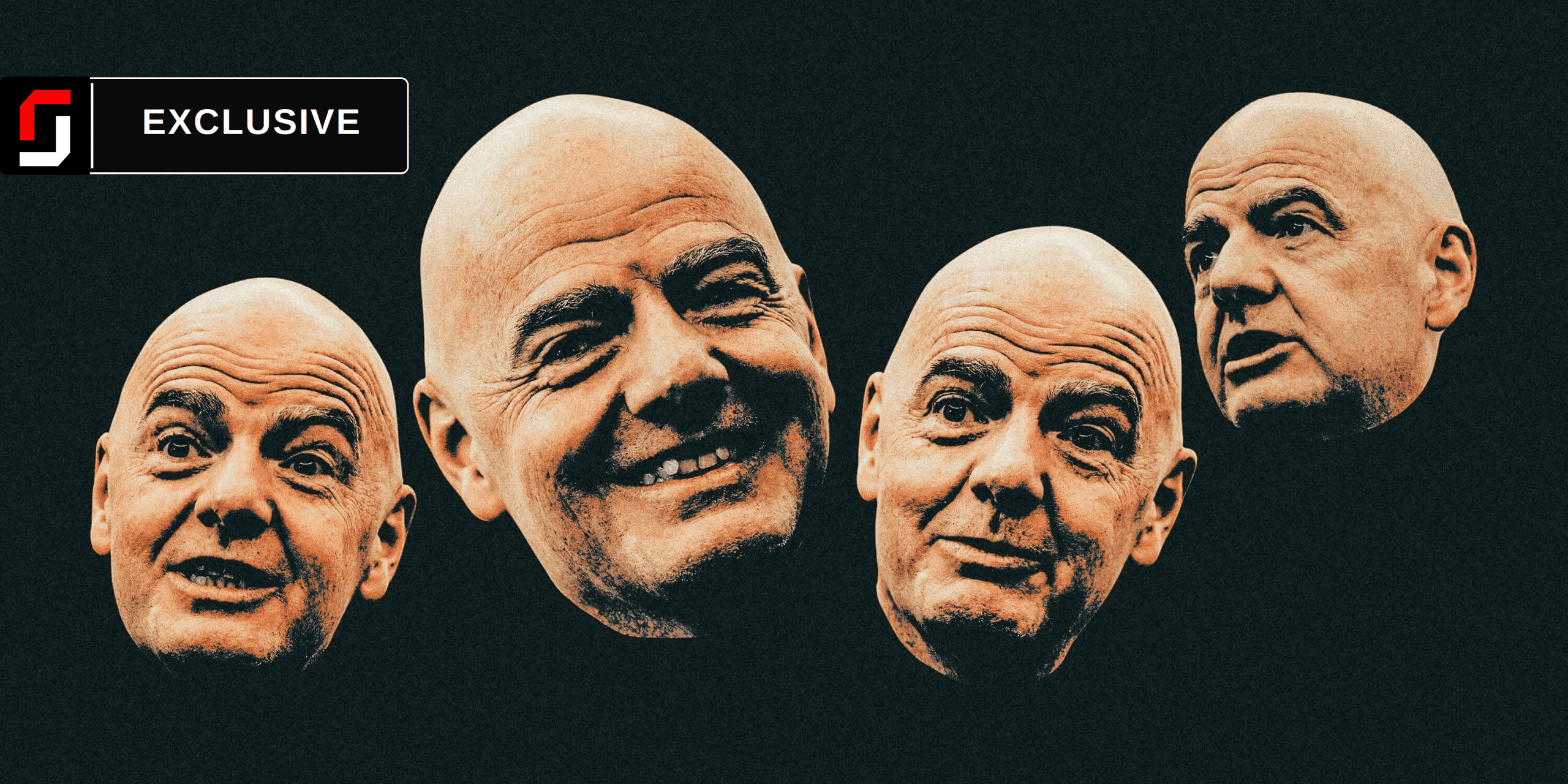
FIFA has confirmed a sweeping commercialization plan that would fundamentally change how the World Cup is owned and run. The idea is to create a new entity called FIFA Forward Enterprise (FFE), which would take over FIFA’s commercial and event operations, including the World Cup and Club World Cup. FIFA would retain control, but outside investors would be invited to buy minority, non-controlling stakes.
The numbers are enormous: FFE would try to raise up to $4.2 billion later this year, based on an initial valuation of $20 billion. FIFA’s official line is that the money would flow back into global development programs, with more than $10 billion promised for football development funding over the next four years. Each of FIFA’s 211 member associations would reportedly get access to funding tied to a stake in the new company.
The Kushner-Trump Connection
The identity of the lead investor is what’s really setting off alarm bells. Reports say Infantino has been in talks to bring in Joshua Kushner — brother of Jared Kushner, Donald Trump’s son-in-law — through his venture firm Thrive Capital, via an entity called Thrive Eternal. If the deal goes through, Infantino himself stands to personally gain tens of millions of dollars. The Trump administration is said to be aware of the plan.
Infantino’s own role in the future company is murky and controversial. He’s reportedly expected to serve as “commissioner” of FFE once his FIFA presidency ends in 2031, with a salary potentially comparable to NFL commissioner Roger Goodell’s roughly $64 million a year. FIFA hasn’t confirmed this, saying only that it hasn’t been discussed yet — while insisting the federation and its president should have a “leading role” in the company. Infantino himself has denied the commissioner idea was ever on the table.
UEFA’s Furious Response — and Talk of a Boycott
UEFA didn’t hold back. It called the plan a line “football’s governing institutions should never cross,” insisting the World Cup is “not FIFA’s to sell.”
Things escalated fast from there. European nations are now discussing an actual boycott if Infantino pushes ahead. UEFA is expected to hold an emergency virtual meeting this week, and there’s reportedly real willingness among member federations to use the boycott threat as leverage.
What makes this messier is how the announcement happened. FIFA only confirmed the plan after UEFA went public with what it had been hearing — meaning FIFA didn’t get ahead of the story. Even England’s FA reportedly had no idea the announcement was coming. FIFA hadn’t raised any of this with federations at meetings in New York just before the World Cup final.
Political voices piled on too. UK Prime Minister Andy Burnham said the World Cup isn’t a product — it’s the greatest competition in world sport, and it was never anyone’s to sell, no matter how the deal gets dressed up.
Why Now? Infantino’s Calculus
Two pressures explain the timing.
Re-election. Infantino has run FIFA since 2016 and was re-elected in 2023. He’s up again in 2027. His biggest expansion moves have historically lined up with election cycles — more countries in the tournament has traditionally meant more votes in his pocket.
The 64-team idea. Infantino has signaled that FIFA will formally study expanding the men’s World Cup from 48 to 64 teams after this cycle. He’s framed it as giving every nation, not just Europe and South America, a chance to dream of playing in the tournament. The idea actually originated from a Uruguayan federation official who floated it almost as a surprise at a FIFA meeting — Infantino was reportedly the only one in the room who took it seriously and pushed for it to be studied further. It’s tied to 2030 being the World Cup’s centennial, hosted across six countries on three continents.
The reaction split cleanly along familiar lines: CONMEBOL and CONCACAF’s presidents are on board. Ceferin has called it a bad idea.
The Ceferin-Infantino Feud, Briefly
None of this is happening in a vacuum. The relationship between the two men has been fraying for years, and the last twelve months made it impossible to hide.
The Balogun incident. The breaking point came during this year’s World Cup. American forward Folarin Balogun picked up a red card that should have ruled him out of the round of 16 — until Trump personally called Infantino to intervene, and the suspension was lifted. UEFA called the decision unprecedented and unjustifiable, saying it crossed a red line.
The final snub. In the aftermath, Ceferin skipped the World Cup final entirely — the first time a UEFA president has ever boycotted the tournament’s showpiece match. He’d already been scarce throughout the cycle, missing every Club World Cup match and attending only the opening game of the Women’s World Cup.
The Congress walkout. Back in May 2025, Infantino arrived more than two hours late to FIFA’s own Congress in Paraguay after a detour through Saudi Arabia and Qatar with Trump. Ceferin and other European federation heads walked out in protest.
Older grievances. The tension goes back further than any of this. Ceferin was one of the earliest and loudest voices against expanding the World Cup from 32 to 48 teams. In 2021, FIFA had to abandon plans to hold the World Cup every two years after Ceferin warned European nations simply wouldn’t take part. And even the mundane stuff has become a battleground — Ceferin has criticized FIFA’s dynamic ticket pricing this year, something UEFA has no intention of adopting itself.
What Happens Next
The UEFA emergency meeting this week is the thing to watch. It’ll set Europe’s formal position on the FFE plan, and if Infantino doesn’t budge, a boycott threat that’s currently theoretical could become very real — which matters enormously given how much of the World Cup’s commercial value still runs through European clubs and audiences.
Then again, Infantino has pulled off plans that looked dead on arrival before — the 48-team World Cup, the expanded Club World Cup, even Trump’s presence at this year’s final. Whether UEFA actually holds the line this time, or whether this ends the way the Paraguay walkout did — with a quiet statement about “mutual respect” a few days later — should become clear within weeks.