
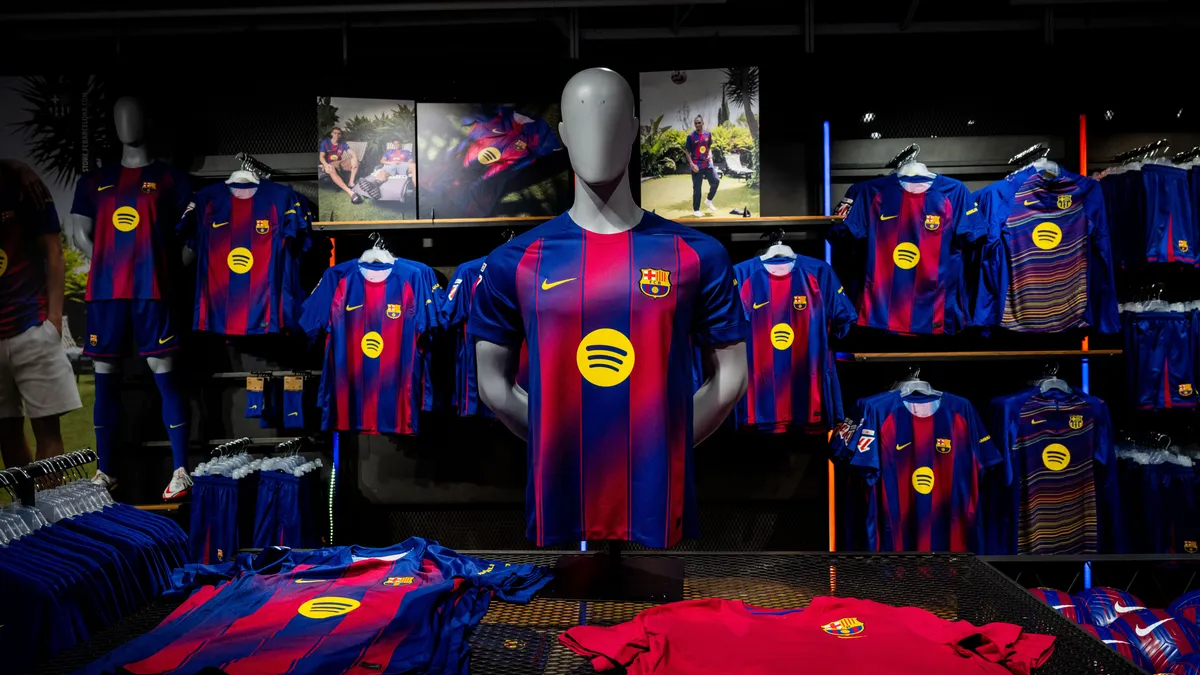
FC Barcelona’s record-breaking €277 million in kit and merchandising revenue for 2025 marks a significant milestone in sports business. The club has effectively transformed its commercial arm, Barça Licensing & Merchandising (BLM), into a primary financial engine.
Here is the breakdown of how they achieved this industry-leading performance:
1. Strategic Retail Control
Since regaining full control of its global retail and e-commerce operations, Barcelona has internalized the entire value chain. By moving away from third-party reliance, the club captures 100% of the margins, which has proven far more profitable than the traditional licensing model.
2. Digital Commerce as a Growth Vector
E-commerce has been the most explosive driver of this revenue:
- Scale: The club’s official online store now processes transactions in 176 countries, with the United States serving as the highest volume market.
- Performance: Online sales tripled year-on-year following the restructuring, with recent growth rates sustained at over 45%.
- Localization: By operating in seven languages—including Japanese and Korean—and optimizing logistics to ensure 48-72 hour global delivery, the club has removed friction for international fans.
3. Nike Partnership & Product Innovation
The renewed strategic partnership with Nike focuses on:
- Collaborations: Launching exclusive, limited-edition product lines (e.g., Spotify-themed jerseys featuring artists like Coldplay and Travis Scott) creates “scarcity demand” that sells out rapidly.
- Diversification: Beyond match kits, BLM has heavily pushed “streetwear” collections and youth-oriented products (such as the mascot-branded clothing line), allowing the club to monetize the brand beyond matchdays.
- Heritage Reimagined: Campaigns like the “Barça x Cruyff” collection use nostalgia and modern tech (including AI) to engage the fanbase on an emotional level.
4. Physical Retail Expansion
Despite playing the majority of its 2025 home matches at the Estadi OlÃmpic LluÃs Companys due to the Spotify Camp Nou redevelopment, the club has expanded its footprint:
- Direct Management: The club now operates 15 directly managed Barça Stores, including strategic locations in major travel hubs like Madrid Airport (Terminal 4).
- Stadium Resilience: Even with limited capacity at the Camp Nou during renovations, the onsite megastore achieved record turnover, proving the strength of the “Barça” brand destination.
5. Financial Stability & Valuation
The financial success of BLM has been so robust that the club has ruled out the sale of the division, despite having the institutional authority to sell up to 49.9% of it. Management now views BLM as a core asset rather than a lever to be traded for immediate cash, noting that profitability metrics within the division significantly exceed typical industry benchmarks.