
Formula One has confirmed that the 2026 Bahrain and Saudi Arabian Grands Prix will not take place due to ongoing conflict in the Middle East, dealing a major financial blow to the sport. The cancellations create a five-week gap in the F1 calendar between the Japanese Grand Prix on March 29 and the Miami race on May 3.
The decision, made in consultation with the FIA and race promoters, also affects supporting series including Formula Two, Formula Three, and F1 Academy.
Financial Impact
According to Guggenheim analysts, F1 stands to lose up to US$200 million from the missed races. Saudi Arabia and Bahrain reportedly pay approximately $55 million and $52 million per year, respectively, to host the championship—contracts among the most lucrative on the calendar, expiring in 2030 and 2036.
Promoter fees represent roughly 27% of F1’s total revenue, or $1.03 billion, meaning cancellations significantly impact the series’ bottom line. In addition to base fees, lost revenue from sponsorship and media rights further amplifies the financial hit.
F1’s Q2 revenue, which reached $1.2 billion in 2025, could reflect a notable decline compared with last year’s 41% year-over-year growth driven by the success of the F1 movie.
Team Implications
The cancellations will disrupt teams’ plans to build momentum in the early stages of the new regulation phase. Aston Martin, grappling with a struggling Honda engine, and McLaren, who missed the Chinese Grand Prix due to Mercedes engine issues, will lose key benchmarking opportunities, particularly at Bahrain, traditionally used for preseason testing.
Middle East investments in F1 teams are substantial: both Saudi Arabia and Bahrain have stakes in Aston Martin and McLaren, while the Qatar Investment Authority owns part of Audi. Financial disruption in the region could therefore have broader effects across the sport.
Executive Reactions
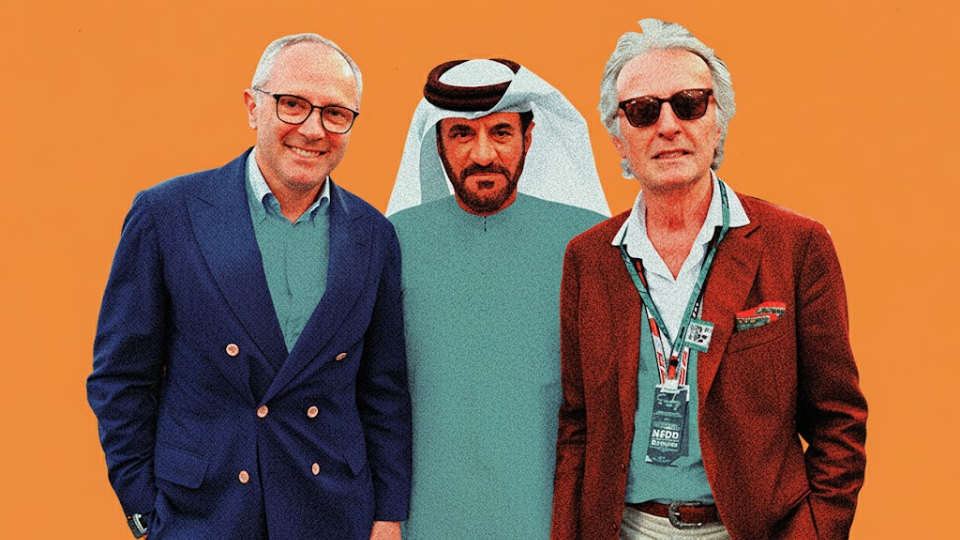
“While this was a difficult decision, it is unfortunately the right one at this stage considering the current situation in the Middle East,†said Stefano Domenicali, F1 president and CEO.
FIA president Mohammed Ben Sulayem added: “The FIA will always place the safety and wellbeing of our community and colleagues first…Bahrain and Saudi Arabia are incredibly important to the ecosystem of our racing season, and I look forward to returning to both as soon as circumstances allow.â€
Effects on Other Motorsports
The conflict also impacts MotoGP and the World Endurance Championship (WEC). Both series have rescheduled their Qatar rounds: MotoGP’s Qatar GP moves to November 8, while WEC’s 1812km race shifts to October 22–24, with the season opener at Imola starting April 17–19.
Unlike F1, these series can adapt their calendars with rescheduled dates rather than outright cancellations.
Looking Ahead
Formula One and associated motorsport series continue to rely heavily on the Middle East for revenue and investment. Any prolongation of the conflict threatens further disruptions, potentially affecting future visits to Qatar, Abu Dhabi, and Azerbaijan.