
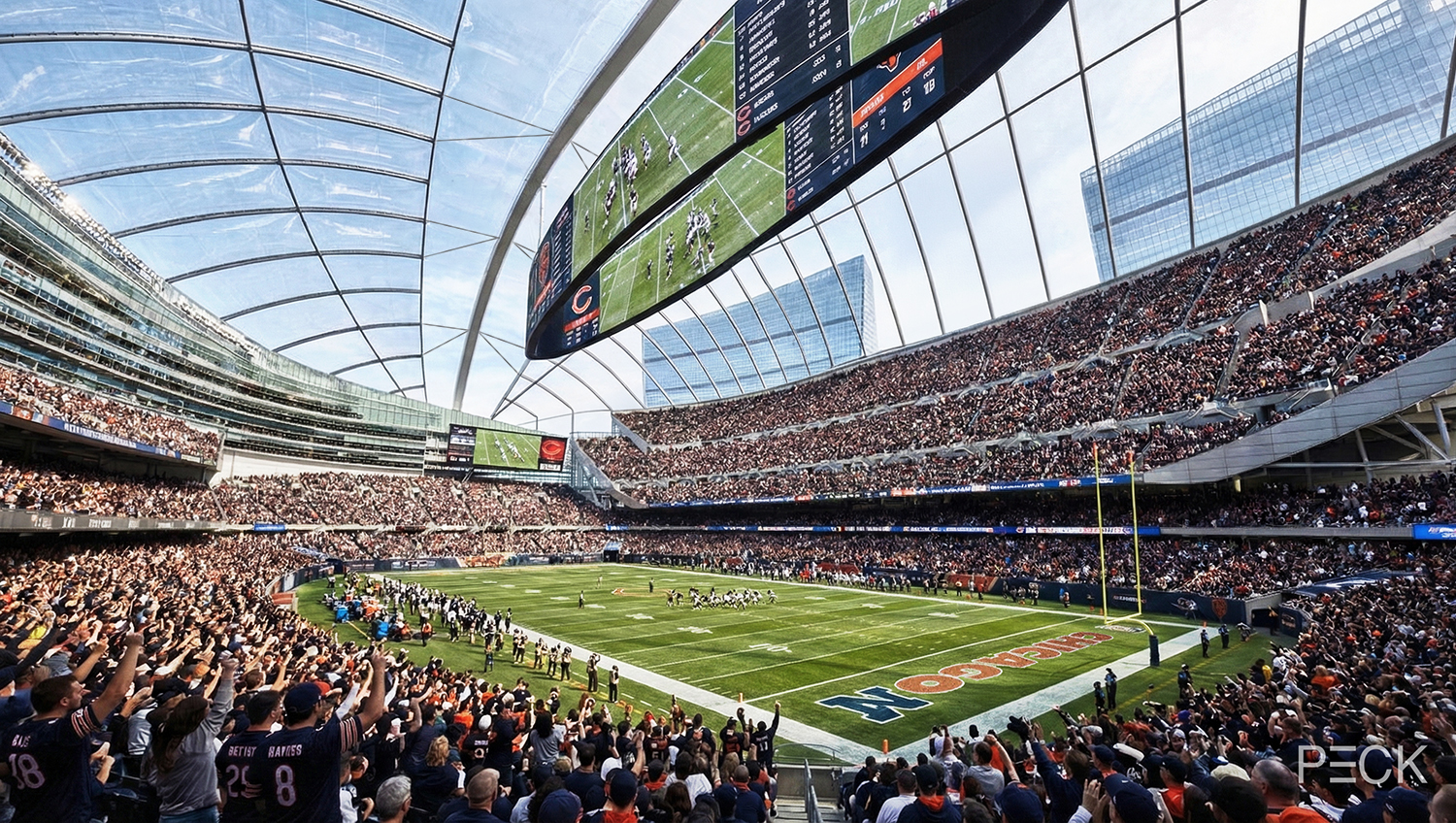
A new proposal could reshape the future of Soldier Field, transforming the historic stadium into a modern, multi-purpose venue capable of hosting major global events, including the Super Bowl.
The concept, developed by Edward Peck Design, presents an alternative to building a new stadium for the Chicago Bears, instead reimagining their current home with significant upgrades and surrounding development.
The plan outlines a major renovation of Soldier Field that would increase capacity from 61,500 to approximately 72,000, add new luxury suites and expanded seating, and introduce a lightweight ETFE roof, enabling year-round use. Facilities would be upgraded to meet Super Bowl-level standards, while preserving the stadium’s historic structure through adaptive reuse.
A key feature of the concept is the creation of a surrounding entertainment district designed to activate the site beyond game days. The development would include retail, dining, hospitality spaces, hotels, residential units, public plazas, and rooftop terraces overlooking the lakefront. The goal is to transform the venue into a 365-day destination that generates consistent economic activity.
The proposal also envisions building over Lake Shore Drive and nearby rail lines to unlock new space and better integrate the stadium with Chicago’s urban core. This approach is intended to strengthen tourism, improve accessibility, and maximize the economic impact of the lakefront location.
The idea arrives as the Chicago Bears continue to evaluate long-term stadium options, with their current lease at Soldier Field running through 2033. Competing proposals in Arlington Heights and Hammond remain under consideration, but this concept offers a third path: staying in the city while modernizing the existing venue.
Supporters of the plan also point to its sustainability benefits, emphasizing reduced demolition, preservation of infrastructure, and more efficient use of embodied energy. According to Edward Peck Design, the project aims to position Soldier Field as a world-class global venue while maintaining its cultural legacy and enhancing its role within Chicago’s sports and tourism ecosystem.