
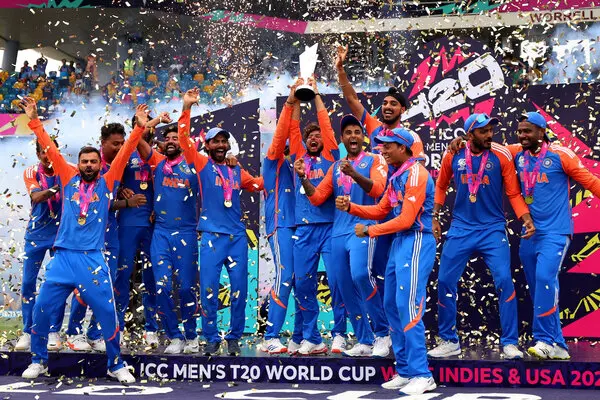
India’s sports industry has crossed the $2 billion mark for the first time, reaching approximately Rs 18,864 crore ($2.13 billion) in 2025, according to the latest WPP Media report, Sporting Nation: Building a Legacy. The milestone reflects a 13.4% year-on-year growth, underscoring the rapid commercialization of sport in the country.
The report highlights that the sector has nearly doubled over the past four years, growing from Rs 9,530 crore in 2021 to its current size, with a compound annual growth rate of around 19%. This expansion is primarily driven by three key revenue streams: media spending, sponsorships, and athlete endorsements.
Media spending emerged as the largest contributor, accounting for 51% of the total sports economy at Rs 9,571 crore. The surge is largely fueled by strong demand for live sports content across television and digital platforms, with advertisers continuing to prioritize premium inventory around major events.
Within this ecosystem, cricket remains the undisputed commercial powerhouse. The sport alone accounted for over Rs 9,000 crore in media spending, reinforcing its dominance in attracting both viewership and advertiser confidence. The report notes that cricket’s consistent audience engagement enables broadcasters and platforms to maintain premium pricing.
Sponsorships represented the second-largest revenue stream, generating Rs 7,943 crore in 2025. Growth in this segment has been driven more by rising asset valuations than by an increase in deal volume, reflecting a maturing market where premium properties command higher prices. The Indian Premier League continues to be the centerpiece of this growth, with team sponsorship revenues surpassing Rs 1,000 crore for the first time.
Athlete endorsements contributed Rs 1,350 crore, with cricket stars leading the way. However, the report also notes a gradual diversification, with athletes from sports such as badminton, athletics, and kabaddi beginning to secure brand partnerships, albeit on a smaller scale.
Despite this expansion, cricket remains overwhelmingly dominant, accounting for nearly 89% of the total sports economy. The report even highlights that cricket’s standalone economic footprint in 2025 exceeded the entire Indian sports industry from the previous year, illustrating the scale of its influence.
Emerging sports, meanwhile, faced challenges, with sponsorship revenues declining by 12.2% due in part to the absence of key properties like the Indian Super League. However, alternative events and leagues, including new initiatives in athletics, volleyball, and pickleball, helped partially offset the gap.
The industry also showed resilience in the face of regulatory changes, particularly restrictions affecting real-money gaming sponsors. Traditional sectors such as banking, automobiles, and FMCG quickly filled the void, maintaining—and in some cases increasing—overall sponsorship value.
Overall, the report paints a picture of a sports economy that is growing rapidly but remains heavily concentrated around cricket. As India’s sports industry moves deeper into its $2 billion era, sustained growth for emerging sports will depend on stronger league structures, more consistent media exposure, and continued brand investment.