
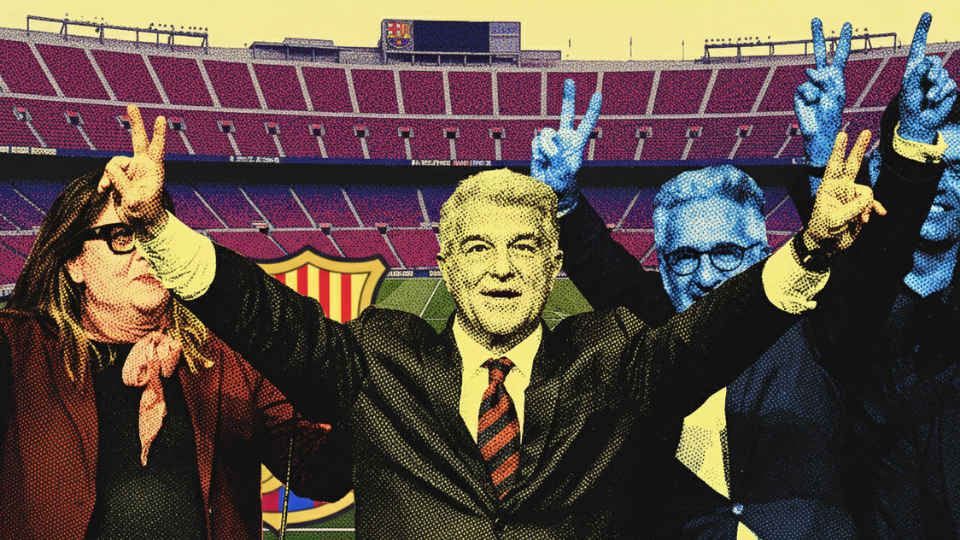
For the members of FC Barcelona, the verdict was clear. With 68.18 percent of the vote, they handed Joan Laporta another mandate that will keep him in charge until 2031. The election result was framed by the president as an endorsement of the work already done — and, more importantly, of the work still unfinished.
“We have the strength to continue this project,†Laporta said after the vote, referencing the reconstruction of the club’s stadium and broader campus redevelopment.
But beyond the celebratory rhetoric lies the central question that will define Barcelona’s next five years: can the club transition from financial engineering to sustainable revenue growth?
At the heart of that transition sits the rebuilt Spotify Camp Nou.
The legacy of crisis
Few European clubs suffered a financial collapse as severe as Barcelona’s in the aftermath of the pandemic. A mix of collapsing revenues during COVID-19 and aggressive spending in the final years of the Josep Maria Bartomeu presidency left the club’s balance sheet deeply damaged.
In 2018-19, Barcelona reported net equity of €132.6 million. Two seasons later, the figure had plunged to negative €450.7 million, following consecutive years of heavy losses.
Even now, the recovery remains incomplete. If current forecasts hold, the club will still carry around €150 million in negative equity by the end of the 2025-26 season.
The immediate solution during Laporta’s current presidency was not operational profitability but extraordinary transactions — the so-called palancas, or “levers.â€
Selling tomorrow to survive today
Barcelona’s strategy has relied heavily on monetising future assets to generate short-term liquidity.
The most significant deal came in 2022, when the club sold 25 percent of its La Liga television rights to the U.S. investment firm Sixth Street.
The agreement produced €519 million in cash, allowing Barcelona to stabilise finances and register new players. But the cost is structural: roughly €40 million per year in television income now flows to Sixth Street instead of the club.
It is a trade-off that highlights the dilemma facing Barcelona — short-term survival versus long-term revenue potential.
The uncertain future of Barça Vision
Another pillar of the financial strategy was the creation of Barça Vision — later reorganised as Barça Produccions — a digital and audiovisual subsidiary designed to attract outside investors and capitalise on the club’s global brand.
Initially valued at €400 million, the project promised new income streams through digital content, Web3 initiatives and media production.
Reality has been more complicated.
Several investors failed to meet their financial commitments, and revenues have fallen short of projections. The company’s valuation has already been revised downward to €178.3 million, raising concerns that further adjustments may follow if growth does not accelerate.
For a club still dependent on extraordinary income, that uncertainty matters.
Everything leads back to Camp Nou
Ultimately, Barcelona’s financial recovery is tied to the redevelopment of its stadium complex, known as Espai Barça.
The project — financed with around €1.5 billion in debt arranged by Goldman Sachs — includes the renovation of the stadium and broader infrastructure upgrades around it.
The business plan is straightforward: the new stadium must generate significantly higher recurring income.
Barcelona expects roughly €247 million in additional annual revenue, driven by:
- hospitality and VIP seating
- sponsorship and naming rights
- museum and stadium tours
- events and conferences
- ticketing and food services
In theory, those revenues will service the stadium debt without constraining spending on the sporting side.
In practice, delays complicate the timeline. What was originally projected as a 2025 completion date is now closer to 2028, pushing back the moment when the stadium can operate at full capacity.
The wage bill question
Barcelona has also attempted to rebalance its finances by reducing the cost of the first-team squad.
At its peak during the late Bartomeu years, the club’s wage bill approached €650 million, among the highest in world sport.
Under Laporta, the figure has gradually fallen as expensive contracts expired — particularly after the departures of players such as Lionel Messi, Sergio Busquets and Gerard Piqué.
Still, the projected cost of the sporting payroll for 2025-26 sits around €565 million, a reminder that Barcelona’s financial model remains closely tied to on-field competitiveness.
A five-year test
For Laporta, the second consecutive presidency will likely be remembered not for trophies but for financial transformation.
The strategy is clear: move from extraordinary transactions to ordinary revenue.
Whether that transformation succeeds depends largely on one asset — the stadium rising again in northern Barcelona.
If the new Camp Nou delivers the revenues the club expects, Barcelona may finally close the chapter of emergency financing. If it does not, the levers that defined the past few years may prove harder to leave behind.