
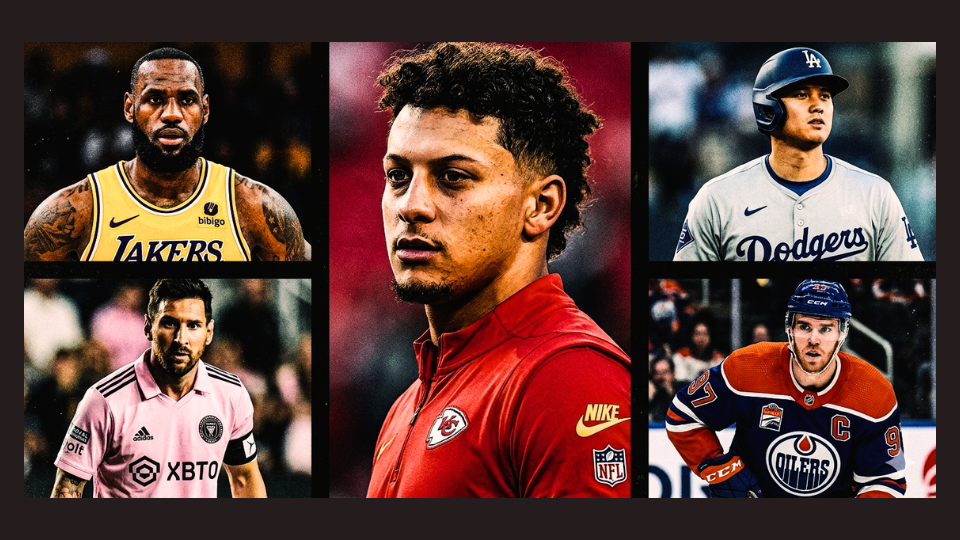
The NFL wears Nike. The Premier League wears everything. This difference isn’t cosmetic — it reflects two fundamentally different philosophies about how sports leagues create and distribute commercial value, with measurable consequences for long-term financial growth.
When you watch an NFL game, every player on every team is dressed by Nike. When you tune into a Premier League match, you might see Nike on one side and Adidas on the other — with Puma, Umbro, or Castore elsewhere in the table. This is not a trivial aesthetic distinction. It is the visible surface of two entirely different commercial philosophies, and the financial gap between American and European sports leagues is, in no small part, a consequence of it.
The question of whether a league should negotiate a single, centralized kit supply deal or allow each club to pursue its own arrangements has no universally correct answer. Both models have internal logic. But examining them through the lens of revenue data reveals why the centralized American approach has produced more consistent, scalable financial growth — and why the European model, for all its upside for elite clubs, introduces structural fragility that is increasingly difficult to ignore.
The Two Models, Defined
In major American sports, the league itself is the commercial counterparty. Nike has been the exclusive on-field uniform supplier for the NFL since 2012, for the NBA since 2017, and for MLB since 2020. Adidas held the equivalent position in MLS since 2017, with that partnership recently extended through 2030. The NHL shifted from Adidas to Fanatics for the 2024–25 season — but the model remained the same: one supplier, all teams, one contract.
Current official kit suppliers — major US leagues (2025–26)
| League | Kit Supplier | Model | Since |
|---|---|---|---|
| NFL | Nike | Centralized | 2012 (extended to 2038) |
| NBA | Nike | Centralized | 2017 |
| MLB | Nike / Fanatics | Centralized | 2020 |
| MLS | Adidas | Centralized | 2017 (extended to 2030) |
| NHL | Fanatics | Centralized | 2024–25 |
| Premier League | Nike, Adidas, Puma, others | Club-by-club | Always |
| La Liga, Bundesliga, Serie A | Various per club | Club-by-club | Always |
In European football, clubs negotiate independently. Liverpool signed what was reported to be the most valuable kit deal in Premier League history with Adidas, reportedly worth £100 million per season from 2025. Manchester United earn approximately £90 million annually from Adidas. At the other end of the scale, newly promoted sides may earn as little as £6 million. The same league, the same broadcast platform, the same match weekends — but a 15-fold commercial gap between clubs based on individual negotiating power.
The Revenue Gap: What the Numbers Show
Before attributing the American leagues’ revenue dominance entirely to their kit sponsorship model, it is worth placing the headline figures on the table.
$23B+
NFL total revenue, 2024 — highest of any sports league globally
$12.1B
MLB total revenue, 2024 fiscal year
$11.3B
NBA total team revenues, 2024
$1.68B
Premier League combined club sponsorship value, 2024–25 — up 12.4% year-on-year
The NFL alone generates more revenue from its media rights than the five major European soccer leagues combined. That is a striking data point — and it speaks directly to the structural logic of centralization. When a league negotiates as a single entity, the counterparty on the other side of the table faces the full commercial weight of the product, not a subset of it.
“The NFL alone generates more from media rights than the five major European football leagues combined. Kit deals follow the same logic: centralization aggregates negotiating power that no individual club could match.”
The Premier League’s sponsorship market grew 12.4% in 2024–25 — an impressive figure. But that growth is concentrated. The “big six” clubs (Manchester City, Manchester United, Liverpool, Arsenal, Chelsea, Tottenham) account for nearly 74% of the entire league’s club sponsorship value. The commercial fortunes of the other 14 clubs are, in comparison, marginal — and structurally dependent on how well the top clubs perform in European competition.
Why Centralization Drives Systematic Growth
The league becomes the product
In the American model, the Nike swoosh on an NFL jersey does not primarily signal “this is the Dallas Cowboys.” It signals “this is the NFL.” The brand equity of the league — its broadcast reach, its cultural footprint, its fanbase — is what the kit supplier is paying for. That means the league captures commercial value that, in Europe, accrues either to individual clubs or evaporates entirely for smaller sides.
This distinction matters enormously when negotiating multi-year, multi-billion-dollar contracts. Nike’s deal with the NFL, extended through 2038, is underwritten by the certainty that every franchise will remain in the top division, that viewership will remain concentrated, and that the NFL brand will not be diluted by relegation, financial collapse, or the departure of marquee franchises. No European league can offer those guarantees.
Closed leagues eliminate sponsorship risk
Structural advantage
American major leagues are closed systems: no promotion, no relegation, no franchise exit. Every team retains its position and its territory indefinitely. This structural permanence directly increases the value of centralized sponsorship contracts — sponsors face no scenario in which the league’s composition changes dramatically mid-deal.
For a European kit manufacturer, the risk calculus is fundamentally different. A club-level deal might be signed at £40 million per season on the assumption of Champions League participation — and then the club finishes seventh, loses its European revenue stream, and the kit brand’s exposure collapses. Newcastle United’s commercial trajectory illustrates this in reverse: their return to the Champions League drove an estimated £8.3 million increase in their fair-market front-of-shirt sponsorship value in a single season. European football’s biggest commercial asset — competitive uncertainty — is simultaneously its biggest commercial liability.
Revenue sharing creates a more valuable collective
In American sports, centralized commercial revenue — including kit supply fees — is distributed across all franchises. This produces a floor below which no team’s commercial value can fall, creating a more financially healthy collective ecosystem. A more financially stable bottom half of the league means more competitive games, higher average attendance, and greater broadcast value — which loops back to strengthen the centralized commercial proposition.
European football’s equivalent mechanism — the Premier League’s solidarity payments and parachute payments for relegated clubs — exists precisely because the revenue inequality created by the free-market model is severe enough to threaten the viability of smaller clubs. The correction mechanism acknowledges the problem but does not solve it structurally.
The European Model Is Not Simply Inferior
A fair analysis requires acknowledging what the club-by-club model does well — and for whom it does it well.
Elite clubs can exceed any centralized ceiling
Manchester United’s Adidas kit deal at £90 million per season, or Liverpool’s reported £100 million arrangement, dwarf what any individual team would receive under a centralized distribution model. If the Premier League negotiated a single kit supply deal worth, hypothetically, £400 million per season and split it twenty ways, each club would receive £20 million. That would represent a dramatic reduction for the top clubs, and those clubs — with their global fanbases and individual brand equity — would rationally resist it.
This is why Adidas’s deal with Inter Miami CF in MLS — structured through the league’s centralized model — generated enormous social media value (2.7 million engagements on Lionel Messi’s kit reveal alone) that benefited Adidas’s MLS relationship as a whole, not just one franchise. The centralized model captures systemic value; it cannot always capture individual brand peaks.
Competition between suppliers drives product quality
When Nike, Adidas, Puma and others compete for club contracts across a single league, the result is product innovation and marketing investment that a sole-supplier model does not incentivize equally. The 2024 MLB uniform controversy — in which players and fans widely criticized the quality of Nike-designed, Fanatics-manufactured jerseys as “cheap” and “see-through,” ultimately forcing the league to announce design corrections for 2025 — illustrated what can happen when there is no competitive pressure on the incumbent supplier. In the Premier League, a club can simply switch manufacturers at contract renewal if quality or commercial terms disappoint.
Notable case
Aston Villa terminated their Castore deal prematurely after players complained the fabric “soaked up too much sweat.” They moved to Adidas and at least doubled their kit deal value — a corrective mechanism only available in a free-market model.
Individual sponsorships can build distinct cultural identities
A club’s kit manufacturer is part of its visual identity and cultural positioning. Arsenal’s return to Adidas in 2019 was treated as a significant cultural moment. Liverpool’s Adidas partnership carried associations with the club’s continental heritage that a league-assigned supplier could not replicate. The freedom to choose a kit partner allows clubs to signal something about who they are — a commercial and cultural dimension that the centralized model flattens.
A Middle Path: The Rise of the Jersey Patch
One significant development in American sports is the gradual introduction of individual team sponsorship patches — primarily in the NBA and MLB — alongside the existing centralized kit supply. This represents a partial convergence toward the European model’s layered approach, while preserving the centralized kit supply agreement.
In MLB, 25 of 30 teams had jersey patch sponsors by the 2025 season, with all 30 expected to carry patches from 2026. In the NBA, individual team patch sponsors have operated since 2017. These patches operate on club-level commercial terms — healthcare companies, financial institutions, and consumer brands paying individual franchises for jersey real estate — while the Nike or Fanatics supply contract remains a league-level arrangement.
Emerging hybrid
MLS added an Apple TV sleeve patch worn by every team — a league-wide digital media sponsorship on top of the Adidas supply deal. This layered approach: one centralized kit supplier, one league-wide media partner, plus individual club front-of-shirt sponsors, may represent the most sophisticated commercial architecture in professional team sports.
MLS has developed this hybrid model most fully: Adidas as league-wide kit supplier, Apple TV on every left sleeve as the league’s media partnership emblem, and individual club front-of-shirt sponsors for each of the 30 franchises. In 2025, Apple TV’s sleeve patch generated an estimated $55.8 million in media value across the season — a figure that would have been impossible to achieve if each team had negotiated its own sleeve partner independently.
The Parallel with Media Rights: A Pattern, Not a Coincidence
The kit sponsorship model does not exist in isolation. It is one expression of a broader commercial philosophy that pervades the structure of American professional sports — and the pattern repeats consistently across revenue streams.
American leagues negotiate media rights collectively, as leagues, not as individual franchises. The result is contracts of a scale that individual clubs could never approach. European football’s largest clubs, by contrast, retain individual broadcasting rights in some competitions and have historically resisted attempts to centralize international rights distribution. The Premier League’s 2024 domestic media rights renewal essentially flatlined relative to the previous cycle. Italy’s Serie A accepted reduced guaranteed broadcast revenue in its 2025–2029 deal. France’s Ligue 1 failed to attract even a minimum bid of €1 billion for its domestic and international rights combined.
The underperformance of European broadcast rights in recent cycles is not unrelated to the fragmentation of the commercial model. When a league’s commercial identity is less unified — when brands are associated primarily with individual clubs rather than with the league as an institution — the league itself becomes a harder sell to a global broadcaster seeking a single coherent product.
The Bottom Line: Two Answers to Two Different Questions
The American and European models are not competing answers to the same question. They are answers to different questions entirely.
The centralized American model answers: how does a league as an institution grow its commercial value sustainably over time? The answer it provides is coherent — aggregate negotiating power, eliminate risk for counterparties, distribute revenue broadly enough to maintain a commercially healthy collective, and let the league brand rather than individual franchise brands carry the primary sponsorship relationship.
The European free-market model answers: how do the largest, most globally recognized clubs maximize their individual commercial ceiling? Its answer is also coherent — allow clubs with genuine global brand equity to capture that equity directly, let competition between suppliers drive product and commercial innovation, and preserve the identity differentiation that makes individual clubs culturally distinct.
The financial data, however, shows that the American model produces higher aggregate revenue growth, more predictable commercial trajectories, and a stronger collective commercial position. The European model produces higher individual peaks — but also deeper valleys, greater inequality, and systemic vulnerabilities that require continuous structural remediation.
Key Takeaways
The NFL makes more from media rights alone than all five major European football leagues combined — and its centralized kit deal with Nike, running through 2038, is underwritten by the same structural logic: one product, one contract, one counterparty.
European football’s club-by-club model allows Liverpool to earn £100M per year from Adidas while a newly promoted side earns £6M — a 15-fold gap within the same league and the same broadcast window. The free market rewards the strong and compounds the structural disadvantage of the weak.
The most commercially sophisticated model is arguably the hybrid emerging in MLS: a centralized kit supplier (Adidas), a league-wide media partner on every sleeve (Apple TV), and individual club front-of-shirt sponsors — layers of commercial architecture that combine systemic scale with club-level flexibility.
Neither model is universally superior. The question is what you are optimizing for: league-level institutional growth, or individual club commercial peaks. American sports have bet on the former — and the revenue figures suggest that, at the league level, they are winning that bet.