
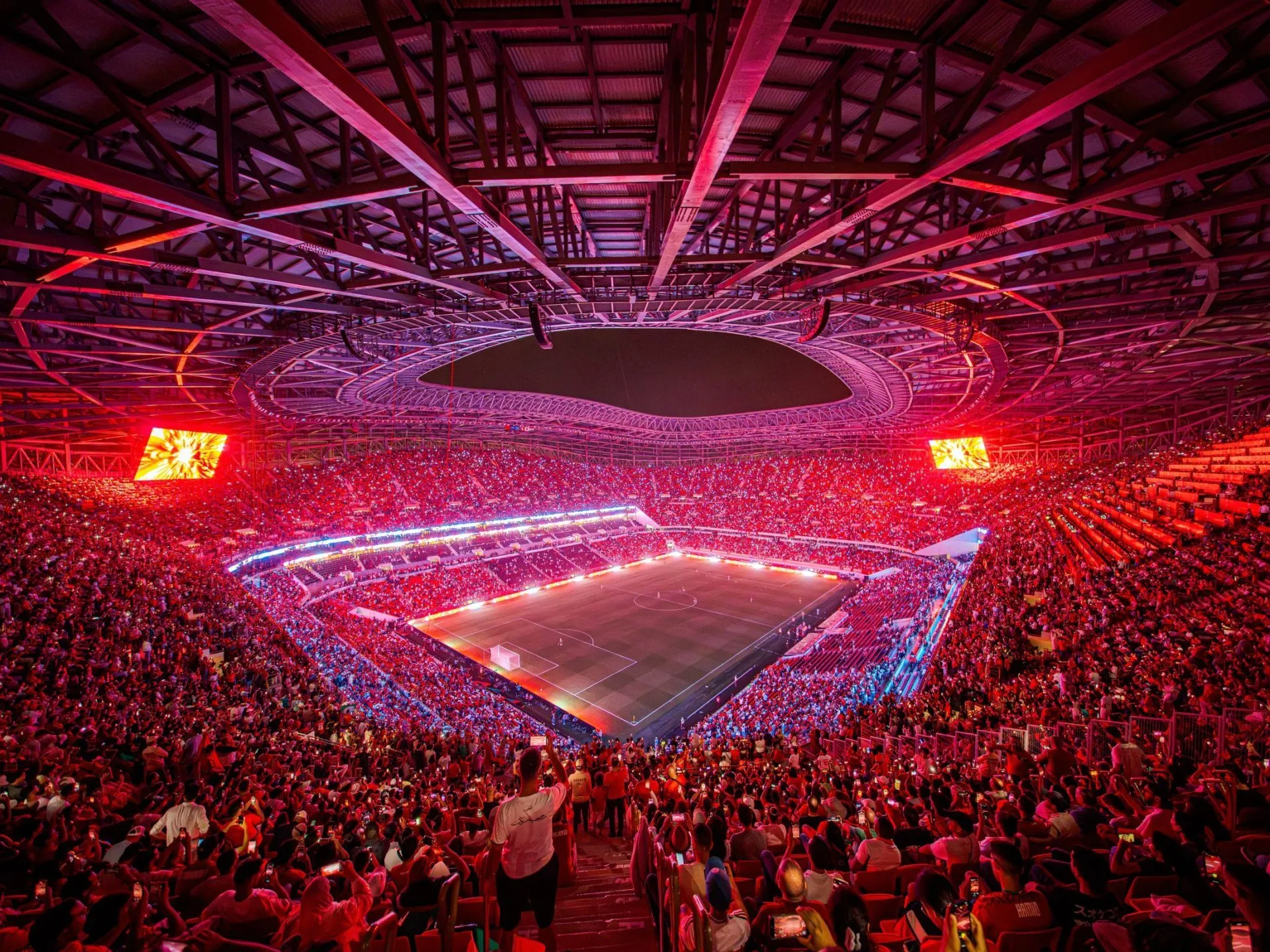
As Morocco prepares for the 2025 Africa Cup of Nations (AFCON) final between Senegal and Morocco, all eyes are on the newly inaugurated Prince Moulay Abdellah Stadium in Rabat. Designed by the global architecture firm Populous, this 68,700-seat arena is not just a sports venue but a symbol of Morocco’s technological ambition and a key candidate for the 2030 World Cup.
Key Architectural Features
The stadium stands out for its blend of traditional Moroccan culture and cutting-edge parametric design:
- The Facade: Inspired by the woven palm trees of Rabat and local “Point de Fès” embroidery, the exterior consists of 19,200 unique champagne-colored aluminum triangles.
- Dynamic Lighting: Integrated by Lamalif Group, the stadium features 70 km of LED bars capable of 60 frames per second, allowing for immersive light shows synchronized with music and match events.
- The “Kop” Stand: Borrowing energy from iconic stands like Anfield, the south end features a massive 23,000-capacity double-tier stand. The upper tier overhangs the lower one by eight meters, creating a “sound wall” effect that amplifies fan passion.
Economic and Sporting Legacy
According to François Clement of Populous, the stadium is designed to provide a “lasting legacy.” Beyond its visual impact, the facility focuses on:
- High-End Hospitality: A Royal Box, VVIP lounges, and skyboxes arranged in a “U” shape to maximize views and revenue.
- Accessibility: Improved infrastructure for both local and international fans.
- Global Stage: Positioned as a premier venue for the 2030 World Cup, which Morocco will co-host with Spain and Portugal.
“The stadium is a recognizable symbol that has illuminated the Africa Cup of Nations and Morocco.” — François Clement, Populous