
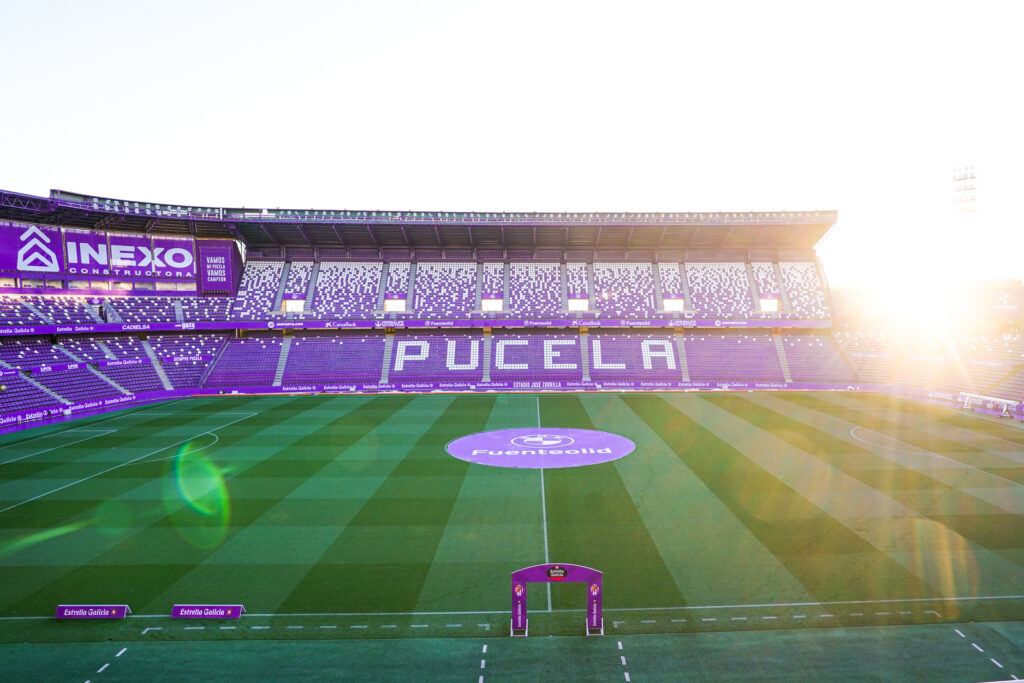
Spanish club Real Valladolid CF has introduced an innovative sponsorship initiative aimed at boosting local companies, offering rotating branding opportunities on the team’s match kit.
The project, named “Patrocinio Espiga,†allows regional businesses to gain visibility through placement on the back of players’ shorts, alongside additional promotional assets across digital and matchday platforms.
A new sponsorship format focused on local impact
Competing in LaLiga Hypermotion, Real Valladolid is positioning itself as a bridge between football and the regional economy.
The rotating sponsorship model enables multiple companies to share exposure throughout the season rather than locking the space to a single long-term partner. The agreement’s financial terms have not been disclosed.
Beyond kit visibility, participating brands also benefit from:
- Social media promotion
- Advertising placements
- Matchday activations and experiences
Supporting regional businesses
The initiative is exclusively designed for companies based in the Valladolid province, aiming to help them compete with larger national and multinational brands.
Four companies have already taken part since the project’s launch in November:
- Bodegas Santiso González
- Miguel Vergara
- Dulces El Toro
- Grupo Ahorra
These brands rotate their presence across club assets, maximizing reach while sharing costs.
Club strategy and positioning
Club co-president Gabriel Solares emphasized the local focus of the project, highlighting the importance of giving regional businesses access to one of the city’s most visible symbols: the team’s kit.
The initiative reflects a broader trend in football sponsorship, where clubs are diversifying commercial inventory and creating more flexible, community-driven partnerships.
A scalable commercial model
By introducing rotational sponsorship, Real Valladolid is effectively:
- Increasing inventory monetization
- Lowering entry barriers for smaller sponsors
- Strengthening ties with the local business ecosystem
If successful, the model could be replicated by other clubs seeking to balance commercial growth with regional engagement.