
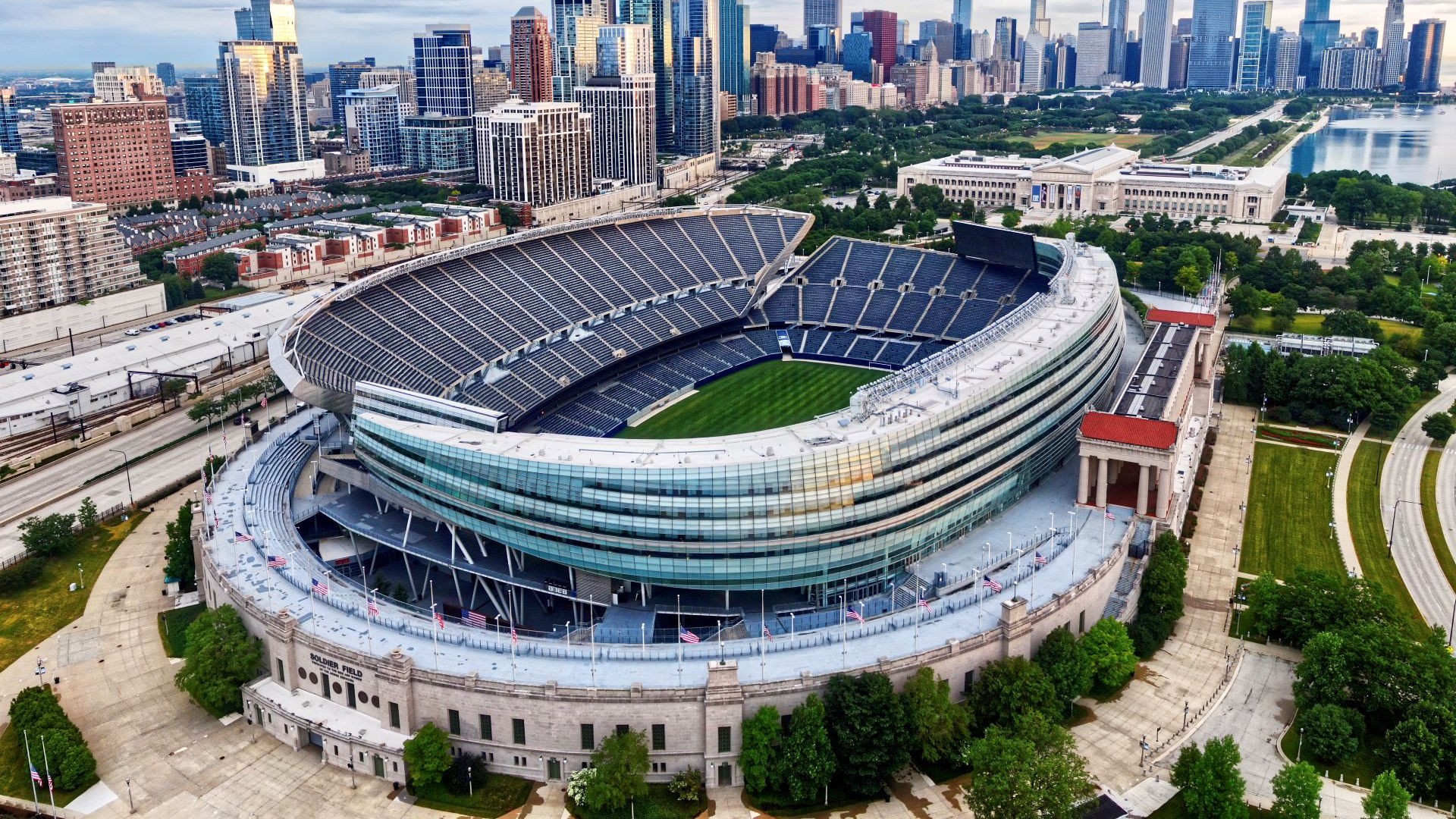
With the Chicago Bears increasingly likely to abandon their historic home for a new stadium in Indiana, the Chicago Park District has proactively proposed a $630 million (£467m) transformation for Soldier Field. The plan aims to ensure the venue remains a viable economic engine for the city’s lakefront, shifting its primary focus from professional football to high-capacity entertainment.
Reimagining the NFL’s Smallest Stadium
Soldier Field, currently the smallest stadium in the NFL with 61,500 seats, has long been a point of contention for the Bears. As the team explores multi-billion dollar privately funded schemes in Indiana (including Hammond and Portage), the Park District’s new proposal focuses on sustainability and modernization:
- Stadium Renovations ($130 Million): Targeted upgrades including a state-of-the-art sound system and modernized dressing rooms to meet the requirements of top-tier touring artists.
- Infrastructure & Museum Campus ($500 Million): A massive investment in the surrounding areas to improve accessibility and integrate the stadium more effectively into the broader tourism economy.
The Indiana Factor and Lease Penalties
The urgency of the proposal follows the Bears’ recent momentum toward crossing state lines. The team’s current lease runs through 2033, but breaking it early would trigger a $90 million penalty. According to the Park District, these funds would be directly reinvested into the renovation project.
A Hub for Global Tours
Soldier Field is already a proven concert powerhouse, having hosted icons like Taylor Swift, Beyoncé, and Oasis. By 2028, the stadium will also lose its secondary tenant, the Chicago Fire (MLS), which is moving to a dedicated facility. This provides a “blank canvas” for the Park District to optimize the calendar exclusively for high-yield events.
“Our responsibility is to ensure that Chicago’s lakefront stadium continues to serve as a strong public asset that supports… the broader tourism economy anchored by the Museum Campus,” stated District spokesperson Michelle Lemons.