
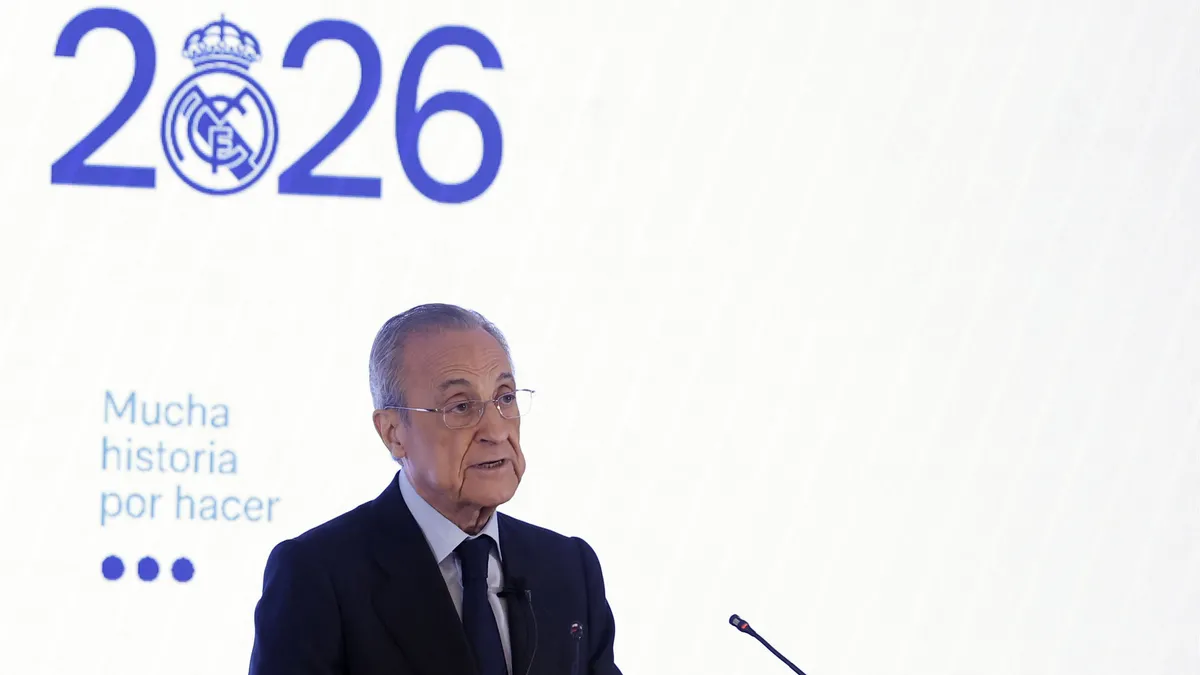
Fresh from securing another term as president of Real Madrid until at least 2030, Florentino Pérez is already focused on the next phase of the club’s transformation. While his latest election victory reaffirmed strong member support, the veteran executive now faces a series of strategic challenges that could shape the future value and ownership structure of one of the world’s most successful sports organizations.
A key issue on Pérez’s agenda is a potential restructuring of the club’s ownership model. Although he continues to insist that Real Madrid is not for sale, he has repeatedly discussed a “corporate restructuring” plan that could see between 5% and 10% of the club’s assets opened to outside investors. Pérez previously valued Real Madrid at more than €10 billion and has recently suggested that the club could eventually reach a valuation of €20 billion.
Any such move would require approval from club members, who remain the legal owners of Real Madrid. Details regarding potential investors, the exact stake to be sold and the structure of the transaction have yet to be disclosed.
Beyond ownership, Pérez is pushing ahead with one of the most ambitious projects in the club’s history: the Madrid Innovation District. Planned around Real Madrid City in Valdebebas, the technology-focused development aims to attract global companies, researchers and startups, creating what has been described as a Spanish version of Silicon Valley. The project is expected to generate significant economic activity and strengthen the club’s long-term commercial position.
Basketball also remains a strategic question. Real Madrid must soon decide whether to renew its EuroLeague license or potentially align itself with the NBA’s emerging European competition project. Pérez has long admired the North American sports business model and has previously shown interest in initiatives that could reshape European basketball.
At the same time, the club continues to explore new commercial opportunities linked to the renovated Santiago Bernabéu Stadium. Pérez’s vision includes transforming the venue into a year-round entertainment destination through immersive digital experiences, premium hospitality offerings and the eventual return of major concerts, which remain restricted due to local regulations and neighborhood concerns.
The Bernabéu’s commercial growth is central to Real Madrid’s financial ambitions. Stadium revenues have surged since the redevelopment project, and the club hopes the venue will become one of the most profitable sports and entertainment complexes in the world.
Financially, Real Madrid remains one of Europe’s strongest clubs. The organization has reported profits for more than 15 consecutive years and became the first football club to surpass $1 billion in annual revenue. However, the Bernabéu renovation has significantly increased debt levels, making sustained revenue growth crucial for future plans.
For Pérez, the next four years will be about more than trophies. His objective is to secure Real Madrid’s position not only as a football powerhouse but also as one of the most valuable sports enterprises on the planet. If successful, the club could redefine the business model of elite football for decades to come.