
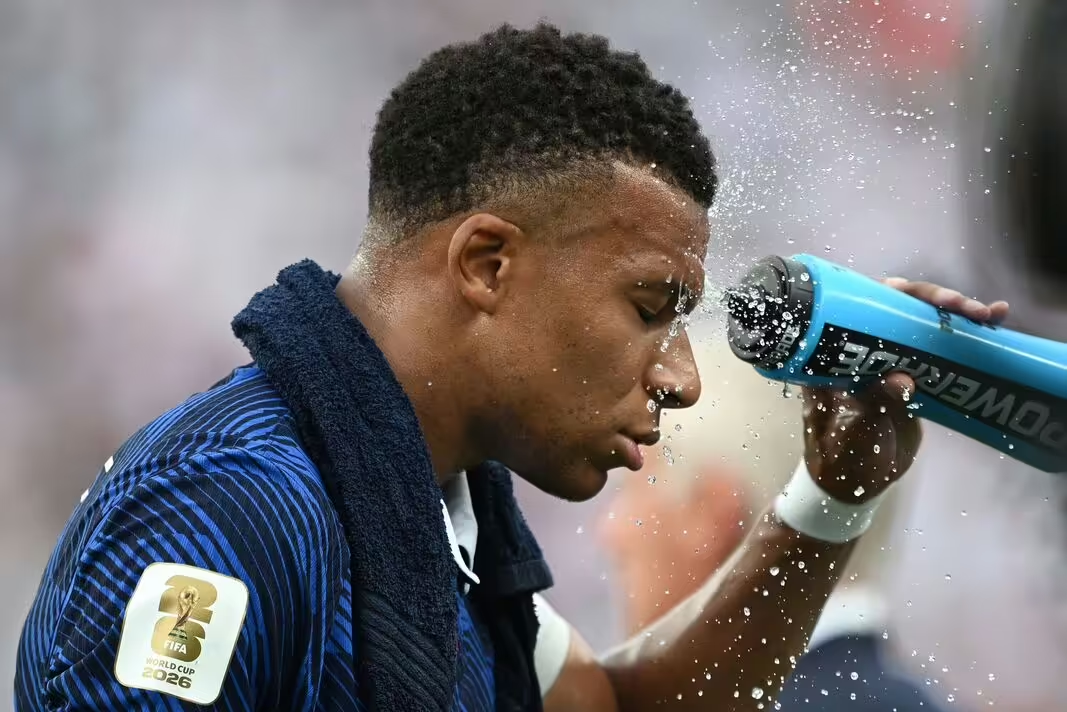
The “hydration breaks” at the 2026 FIFA World Cup have become one of the most debated innovations of the tournament — not for what happens on the pitch, but for what happens around it. Every half now includes a mandatory three-minute stoppage, drawing boos from fans, criticism from players, and scrutiny from coaches, while commercial revenues continue to climb.
The game on the pitch, the business on the sidelines
FIFA introduced mandatory hydration breaks across all 104 matches of the tournament, even in covered stadiums and mild weather conditions.
Players and coaches have openly questioned the decision. Netherlands captain Virgil van Dijk criticized the interruptions, arguing they disrupt match rhythm and reduce the viewing experience. France manager Didier Deschamps went further, suggesting the game is now effectively being played in “four quarters.”
Canada right-back Alistair Johnston captured the commercial suspicion around the rule, suggesting the breaks likely benefit FIFA financially.
Advertising windfall in the breaks
From a broadcast perspective, the economics are clear.
A 30-second World Cup commercial spot in the US market reportedly ranges between $200,000 and $300,000, rising up to $750,000 for high-profile matches. Analysts estimate that hydration breaks alone could generate over $250 million in additional advertising revenue in the United States.
Overall, the 2026 World Cup is projected to generate $8.9 billion in total revenue — a 54% increase compared to 2022 — driven not only by media rights but also by expanded sponsorship inventory and in-match commercial opportunities such as these breaks.
A deeper structural issue in football economics
The backlash over hydration breaks reflects a broader tension in football: the sport’s global popularity is not matched by a centralized economic structure.
Unlike the NBA or NFL, football’s revenues are fragmented across dozens of leagues, federations, and broadcasters worldwide, preventing a unified commercial model.
Average player salaries highlight the gap:
- NBA: $11.9 million
- Premier League: $4.1 million
- NFL: $2.7 million (per player average, due to roster structure)
Despite being the world’s most-watched sport, football distributes revenue across a far more decentralized system.
World cup commercial model is shifting
The 2026 World Cup suggests a gradual shift toward a more centralized and multi-revenue model.
According to projections, FIFA’s reliance on broadcast revenue has declined from 49% to around 30% of total income, as sponsorship, hospitality, ticketing, and in-stadium monetization expand significantly.
Prize money also reflects this growth: it has nearly doubled from $440 million in 2022 to $871 million in 2026.
Conclusion: disruption or evolution?
From a sporting perspective, hydration breaks feel like an artificial interruption of football’s natural rhythm. From a business perspective, however, they represent something more structural: football’s slow convergence toward the commercial logic long used by US sports leagues like the NBA and NFL.
Football’s global demand is already maximized. The real question now is not visibility — but how that visibility is monetized, and how much of that revenue eventually reaches the players.