
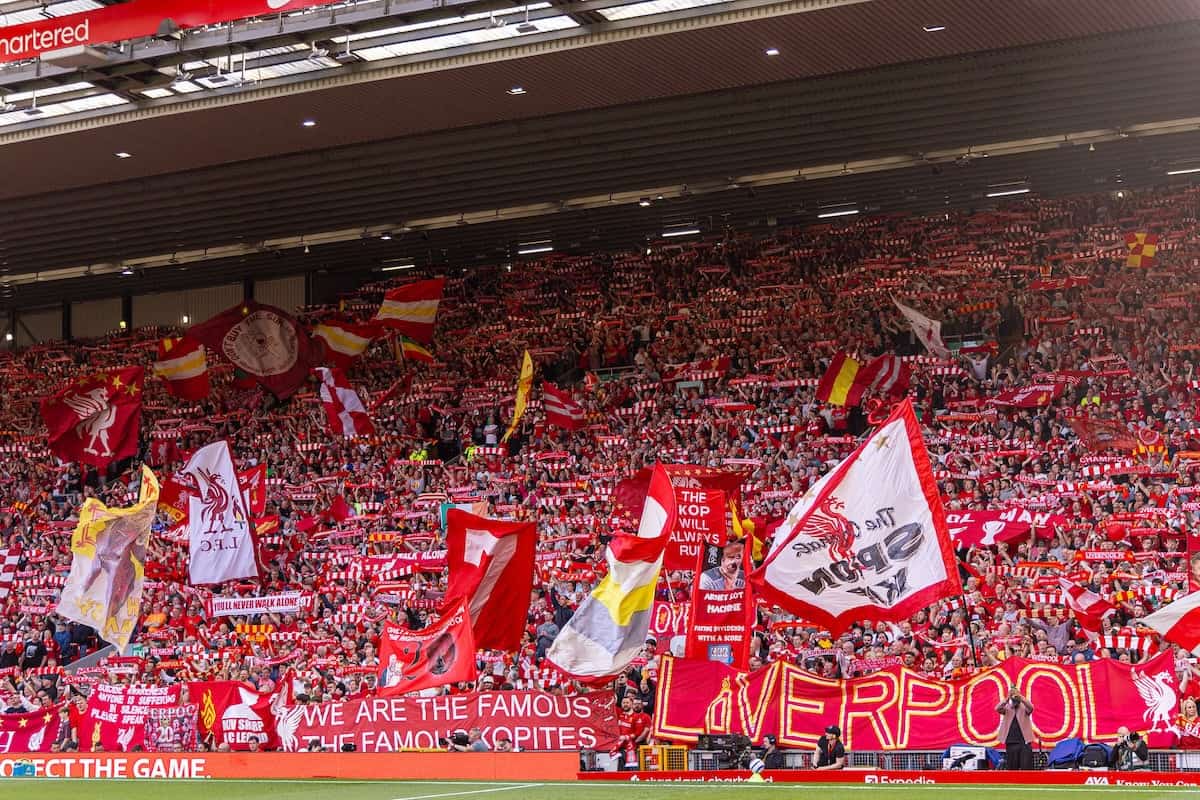
Liverpool are targeting further commercial growth in the United States, with the Premier League champions planning to expand their retail footprint, deepen relationships with American brands and capitalize on football’s growing popularity following the 2026 FIFA World Cup.
Liverpool chief commercial officer Ben Latty told The Athletic that the club believes it has established the strongest Premier League commercial presence in the U.S., with research from GWI estimating that Liverpool have 26 million supporters in the country.
The club currently has 62 official supporters’ clubs across 32 states and 12 international football academies in the U.S. America is also Liverpool’s largest retail market outside the UK, accounting for 26% of its international sales.
Liverpool’s recent two-week pre-season tour of the U.S., which included matches in Nashville, New York and Chicago, attracted more than 116,000 spectators across three games and provided another opportunity to strengthen commercial relationships.
“As a club, obviously we get money to go to the U.S., but it’s much bigger than the fees we get,” Latty said. “It’s about the importance of being on the ground there.”
U.S. brands become increasingly important
Liverpool have developed partnerships with several major U.S.-based companies, including Google Pixel, UPS and Orion Innovation. American fashion brand Tommy Hilfiger joined the club’s commercial portfolio in January, alongside new partnerships with SAS, PayPal, Trimble, Haier and EC Markets.
Liverpool’s global digital reach is another major asset. The club has approximately 227 million social media followers, more than any U.S. sports team, while generating 1.5 billion social media engagements last season.
The club was also the Premier League’s most-engaged team for the third consecutive season and recorded more than 91 million global visits to its official website during the 2025-26 campaign.
Of Liverpool’s 28 commercial partners, 11 are headquartered in the United States, representing 39% of the portfolio and the highest proportion among European clubs.
The club’s commercial director Kate Theobald is based at Liverpool’s New York office, while the organization also benefits from the expertise of Fenway Sports Management in Boston, a subsidiary of Fenway Sports Group, which owns Liverpool.
Liverpool targets 40 global stores
Retail is another major component of Liverpool’s international growth strategy.
The club currently operates 26 standalone stores worldwide, more than any other sports team, with eight new locations opening over the past year in markets including Singapore, Hong Kong, Dubai and London.
The next major target is the United States.
Liverpool have yet to open a standalone store in the country but are actively searching for the right partner. The club ultimately wants to increase its global store network to 40 or more locations over the next few years, with more than 30 expected to be operational by the end of the current season.
The club is also exploring the possibility of establishing a U.S. distribution centre, which would reduce its reliance on its European distribution hub in the Netherlands and potentially allow Liverpool to offer greater product availability, lower shipping costs and faster delivery.
Adidas deal boosts commercial outlook
Liverpool’s commercial revenue reached a record £323 million in 2024-25, but that figure is expected to rise significantly following the club’s new partnership with Adidas.
The German sportswear company replaced Nike as Liverpool’s kit supplier last summer in a deal reportedly worth around £90 million per year.
The 2025-26 home and away shirts became the best-selling kits in Liverpool’s history. Home-shirt sales were reportedly 700% higher than the equivalent product a year earlier, with orders coming from more than 150 countries.
Latty said Adidas had exceeded expectations in its first year and planned to expand the range with additional products, collections and limited-edition releases.
Unlike the previous Nike agreement, which was more heavily based on royalties, the Adidas structure provides Liverpool with a different commercial model that the club believes can support continued retail growth.
Standard Chartered and Expedia deals enter final year
Liverpool are also considering the future of two major existing sponsorship agreements.
Main shirt sponsor Standard Chartered and sleeve partner Expedia both have contracts running until the summer of 2027, with discussions over potential extensions already underway.
Standard Chartered has been Liverpool’s front-of-shirt sponsor for 17 years, making the future of the relationship one of the club’s key commercial decisions.
Expedia joined during the Covid-19 pandemic and has recently undergone significant leadership changes. Liverpool, however, remain confident that their global reach and commercial profile will attract strong interest if either partnership eventually comes to an end.
“We’re nowhere near the ceiling”
Liverpool believe there is still substantial room for commercial growth.
Latty said the club’s commercial operation remains focused on generating sustainable revenue that can be reinvested into the football operation.
“I don’t think we’re anywhere near the ceiling of where we could be commercially,” he said.
With the Premier League’s global popularity continuing to expand and the U.S. market experiencing another boost following the 2026 World Cup, Liverpool see significant opportunities ahead through sponsorship, retail, digital engagement and direct-to-consumer expansion.
The club’s strategy is ultimately designed to convert its global popularity into additional resources for the football operation — ensuring that commercial growth continues to support Liverpool’s ambitions on the pitch.