
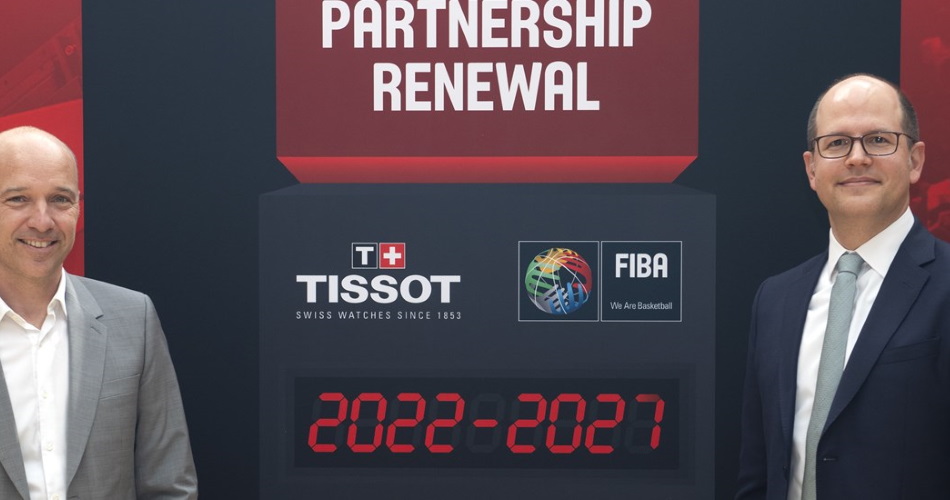
FIBA has extended its partnership with Tissot, keeping the Swiss watchmaker as the federation’s official timekeeper through the 2031 FIBA Basketball World Cup in France.
The renewal will take the relationship, which began in 2008, beyond the 20-year mark and will also cover the 2030 FIBA Women’s Basketball World Cup in Japan. Financial terms of the new agreement have not been disclosed.
The partnership covers FIBA’s national team competitions, including Olympic qualifying tournaments and continental competitions, giving Tissot visibility across a broad international basketball calendar.
A 20-year sponsorship becomes a long-term commercial asset
The extension makes Tissot one of FIBA’s longest-standing commercial partners and underlines the value of continuity in sports sponsorship.
“Reaching a third decade of work with Tissot is the best indicator of how successful the partnership has been,” said FIBA secretary general Andreas Zagklis.
Tissot CEO Sylvain Dolla said the brand has been at the centre of major moments in FIBA basketball and would continue to build on the relationship.
Rather than being tied to a single event, the agreement gives Tissot a long-term platform across FIBA’s international competition calendar, linking the brand directly with the sport’s official timing infrastructure.
Tissot joins FIBA’s wider commercial portfolio
The renewal comes as FIBA continues to build a diversified sponsorship portfolio around its global competitions.
Other partners include Nike, TCL, Yili Group, Smart, Ganten, XTB and 1XBet, while Intersport serves as an official apparel provider and Molten as the federation’s official ball supplier.
With the new agreement extending through 2031, Tissot will remain embedded in FIBA’s commercial ecosystem through two additional World Cups and multiple international competitions.
The length of the deal also reflects a broader trend in sports sponsorship: long-term partnerships can provide brands with consistent global exposure while allowing rights holders to build stable commercial relationships around recurring international properties.