
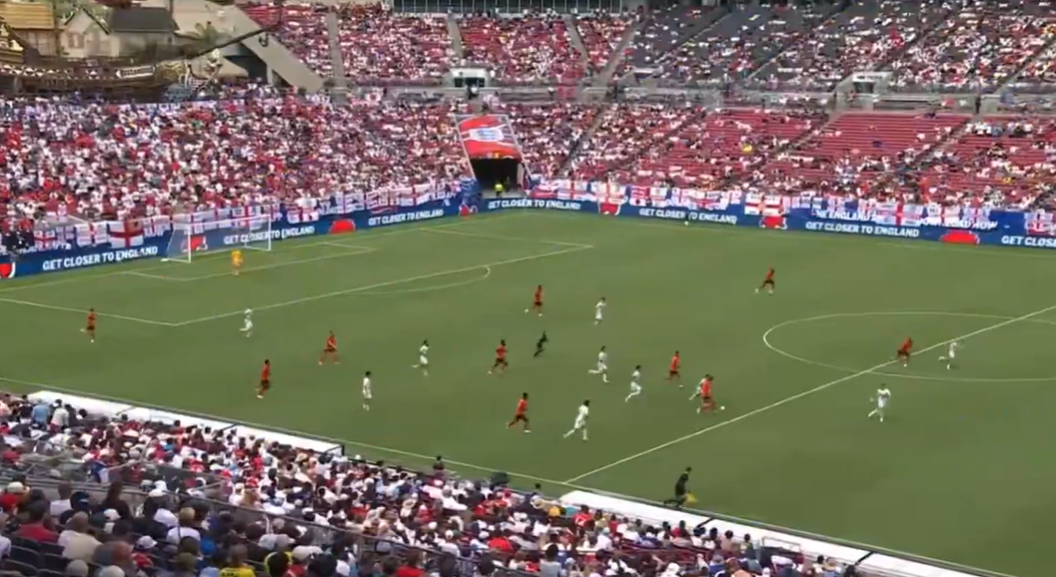
As the countdown to the 2026 FIFA World Cup continues, many football fans watching warm-up matches in the United States noticed that the television coverage looked noticeably different from what they are used to seeing in Europe and other football markets. The unusual viewing experience quickly became a topic of discussion across social media.
According to broadcast experts, one of the main reasons is the difference in television standards. While European broadcasters have traditionally operated with a 50 Hz system, American networks use a 60 Hz format. When live feeds are converted for international audiences, the process can create subtle changes in motion rendering, making the footage appear unfamiliar to viewers.
Color grading is another major factor. U.S. broadcasters often favor higher contrast levels and more saturated colors. As a result, the pitch can appear brighter green and team kits more vibrant than in European broadcasts, where a more natural color balance is typically preferred.
Stadium architecture also plays a role. Many of the pre-World Cup matches have been played in venues originally designed for American football. These stadiums generally feature higher and steeper camera positions than traditional football grounds, creating a compressed view of the pitch and altering the perception of depth on screen.
In addition, American sports broadcasting has long been influenced by the production style of leagues such as the NFL, which relies heavily on close-up shots and dramatic camera angles. Football, by contrast, requires continuous wide-angle coverage to follow the flow of the game, making the differences in presentation even more noticeable to international audiences.
In short, the broadcast style that has caught the attention of football fans is not the result of a technical issue. Rather, it reflects a combination of broadcasting standards, visual production preferences and stadium design characteristics that make American football coverage look and feel distinct ahead of the 2026 FIFA World Cup.