
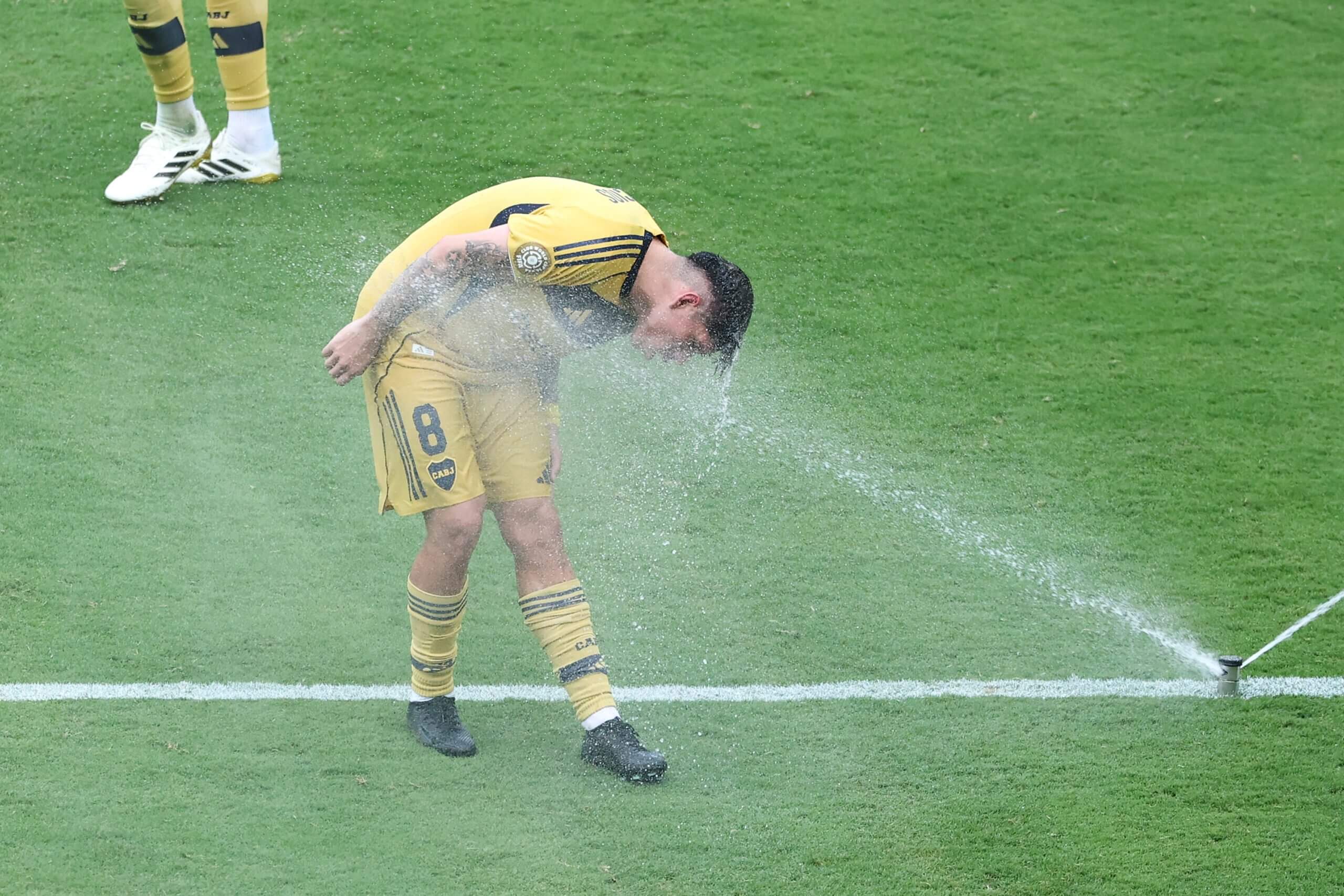
The World Cup kicks off June 11. But the scars from last summer’s Club World Cup haven’t fully healed.
What happened last summer?
Chelsea’s match against Benfica at Bank of America Stadium in Charlotte was delayed two hours due to lightning and took nearly five hours to complete. With just four minutes left in regulation, fans were evacuated from the stands over safety concerns.
That was the sixth weather-related stoppage in the tournament’s first 50 matches — and there wasn’t even rain at the venue.
Beyond the storms, the real problem was the heat. 31 of 57 matches — 54% — were played in conditions exceeding 28°C on the Wet Bulb Globe Temperature (WBGT) scale, the threshold FIFA’s own technical reports flag as dangerous.
Global players’ union FIFPRO stated that PSG vs. Atlético Madrid and Chelsea vs. Esperance should have been postponed outright for breaching that heat threshold.
What did the players say?
During Benfica’s match against Bayern Munich in Charlotte, the WBGT hit 29.2°C. “I don’t think I have ever played in such heat,” said Norwegian forward Andreas Schjelderup. “I don’t think it’s healthy, to be honest.”
Chelsea’s Enzo Fernandez called the conditions “very dangerous.” FIFA President Infantino responded by promising that daytime matches at the 2026 World Cup would be held in covered stadiums.
What’s expected for 2026?
The tournament spreads across 16 cities in the US, Canada and Mexico — and forecasters predict this summer will be unusually hot. Climate scientists calculate that the number of matches exceeding the 28°C WBGT threshold will be significantly higher than the last time the US hosted in 1994, with the likelihood of conditions topping 30°C nearly double that of three decades ago.
Researchers warn that moving games to evening kickoffs won’t be enough on its own. Extreme heat is forecast across Texas, California and Florida, with wildfire risks already flagged in some states.