
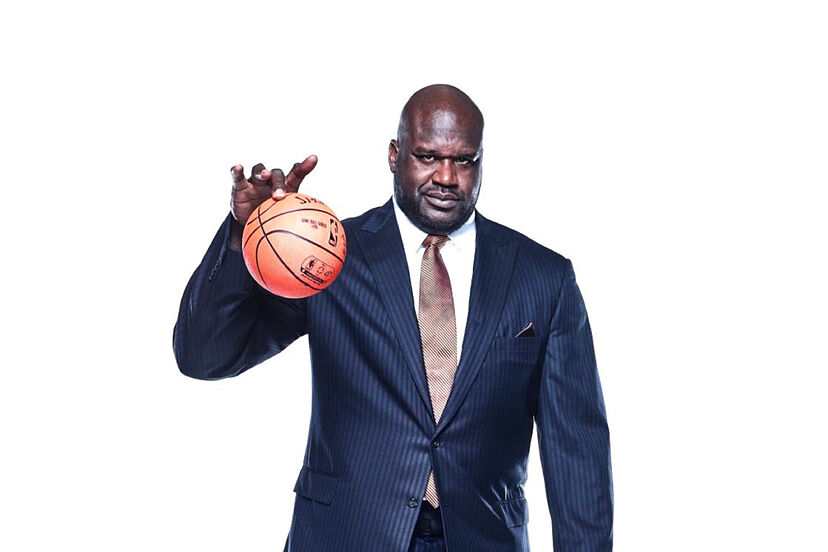
The history of sports marketing is filled not with the stories of those who discovered talent, but with those who gave talent the freedom to become something greater. The endorsement journeys of Shaquille O’Neal and Stephen Curry are not simply signature-shoe success stories — they are case studies in how athletes shattered corporate hierarchy and redefined modern sports branding.
When Shaquille O’Neal entered the NBA, he was more than a dominant center — he was a cultural phenomenon. But when he approached Nike early in his career, he encountered the company’s rigid internal hierarchy.
At the time, Nike was fully committed to protecting the empire built around Michael Jordan and the iconic “Jumpman” identity. According to Shaq, Nike executives told him he would need to prove himself for several years before being considered for his own signature shoe.
Rather than waiting, Shaq made a move that would become symbolic in sports business history: he walked into a meeting with Reebok while wearing a Nike jacket.
Reebok didn’t just offer him a sneaker deal — they offered him ownership of an identity. Shaq embraced the opportunity by creating “Dunkman,” a logo and persona designed to rival the aura of Jordan’s Jumpman silhouette. It was one of the earliest examples of an athlete refusing to be treated as merely part of a brand and instead becoming the brand itself.
The partnership transformed Shaq into more than a player endorsement. He became an entertainment property, a lifestyle figure and eventually one of the earliest athlete-entrepreneurs to fully control his commercial image.
Years after Shaq’s split from Nike, history repeated itself in a different form with Stephen Curry.
When Curry entered negotiations to renew his deal with Nike, what followed became one of the most infamous mistakes in sports marketing history.
During Nike’s presentation, executives reportedly referenced Kevin Durant by mistake and failed to fully communicate a long-term vision built around Curry himself. More importantly, there were lingering doubts inside the company about whether Curry could truly become the face of a global basketball movement.
That hesitation opened the door for Under Armour.
Much like Reebok did with Shaq, Under Armour built its basketball identity around Curry rather than simply attaching him to an existing structure. Curry’s “Chef” persona, revolutionary shooting style and family-friendly image became the foundation of an entirely new basketball ecosystem.
As Curry transformed the sport with his three-point revolution, Under Armour elevated him into the centerpiece of its global strategy. Meanwhile, Nike lost one of basketball’s defining modern icons over what many still consider a catastrophic mix of corporate complacency and lack of vision.
The stories of Shaq and Curry reveal a deeper shift in sports marketing. The old model treated athletes as extensions of a company. The modern era rewards brands willing to build entire identities around the individuality of the athlete.
“Dunkman” and “Chef” were not just logos or nicknames — they became symbols of athletes taking ownership of their narratives.
And in both cases, it was the companies willing to break the rules of traditional endorsement culture that ultimately changed the industry forever.