
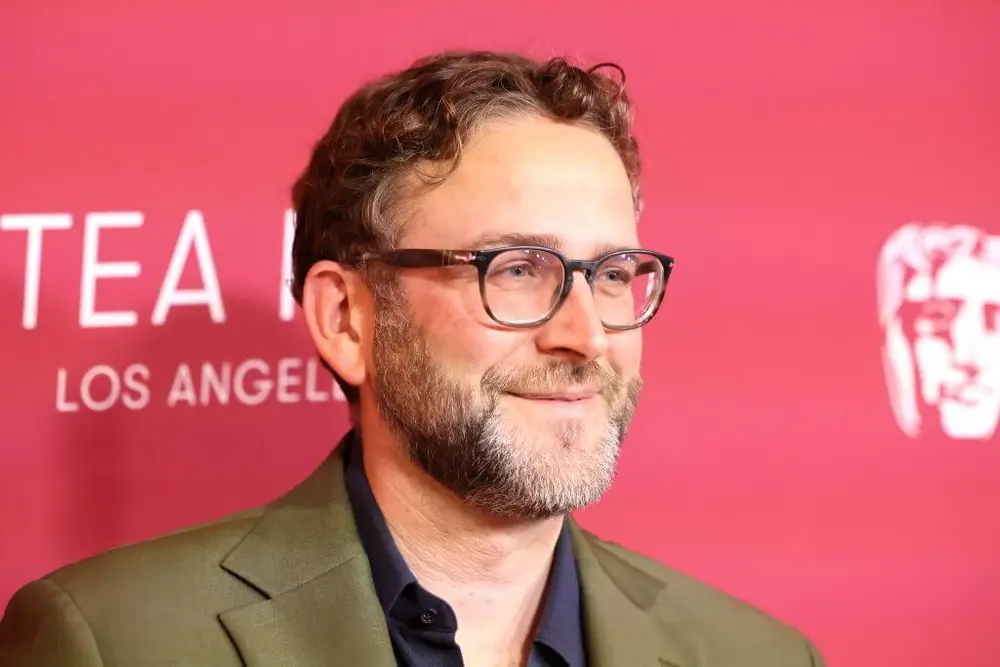
Humphrey Ker, one of the key figures behind Wrexham’s transformation under Hollywood owners Ryan Reynolds and Rob McElhenney, has stepped down from the club’s board.
Ker has also relinquished his position as a trustee of the Wrexham Foundation, formally ending his involvement in the club’s ownership era that began with Reynolds and McElhenney’s takeover in 2021.
The actor and writer initially became Wrexham’s executive director following the takeover, helping shape the club’s strategy during its transition from the National League to the English Football League.
Ker stepped away from day-to-day operations ahead of the 2024-25 season to focus on his comedy career but remained involved with the club at board level.
“Working for and representing Wrexham AFC and the wider town has been the greatest honour of my life,” Ker said. “I am proud of the part I have played in the club’s remarkable journey, both on and off the field.”
He added that the way the club had evolved and become structured had made it increasingly difficult for him to make a positive contribution.
The architect behind the Wrexham project
Ker played a central role before Reynolds and McElhenney even became involved with Wrexham.
He introduced McElhenney to British football while the two were working on Mythic Quest, and later encouraged him to watch Sunderland ’Til I Die, the Netflix documentary series that helped spark McElhenney’s interest in owning a football club.
When the idea became more serious, Ker was tasked with identifying potential clubs.
The search covered clubs across England, Scotland and Ireland before Wrexham was selected ahead of a number of alternatives, including Hartlepool United.
Ker subsequently became one of the most recognisable figures in the Welcome to Wrexham documentary, which helped turn the club into an international sports and entertainment property.
From National League club to global sports brand
Wrexham’s sporting transformation has been accompanied by a significant increase in its commercial profile.
The club achieved three consecutive promotions, rising from the National League to the Championship faster than any club had previously managed.
Its global fanbase and growing commercial appeal also attracted institutional investment. In 2025, U.S.-based Apollo Sports Capital became a minority shareholder, in a deal that valued Wrexham at approximately £350 million ($475 million).
The valuation marked a dramatic change from the club’s position when Reynolds and McElhenney completed their takeover in 2021.
Wrexham has also expanded significantly away from the pitch. Ker recalled that the club employed roughly 25 to 30 full-time staff when it returned to the EFL, with that figure subsequently rising to around 150.
A changing ownership structure
Ker’s departure represents another change among the figures who helped establish Wrexham’s current ownership and operating model.
Shaun Harvey, another early figure in the project, joined the club’s board as a non-executive director in July on an initial three-year term.
For Wrexham, Ker’s exit therefore comes at a point when the club is becoming a substantially larger organisation, with a broader commercial operation, a growing international audience and institutional capital alongside its Hollywood ownership.
That evolution also changes the role of the individuals who helped build the original project.
Ker’s importance to Wrexham’s transformation goes beyond his formal executive position. He helped connect Reynolds and McElhenney with the club, shaped the selection process and became one of the public faces of the project during its early years.
The club’s next phase will be less about establishing the Hollywood story and increasingly about managing the commercial and sporting infrastructure that has grown around it.
Reynolds and McElhenney said in a joint statement: “Humphrey has been a key piece of the Wrexham story from day one and his kindness, humour and height will be missed but never forgotten.”