
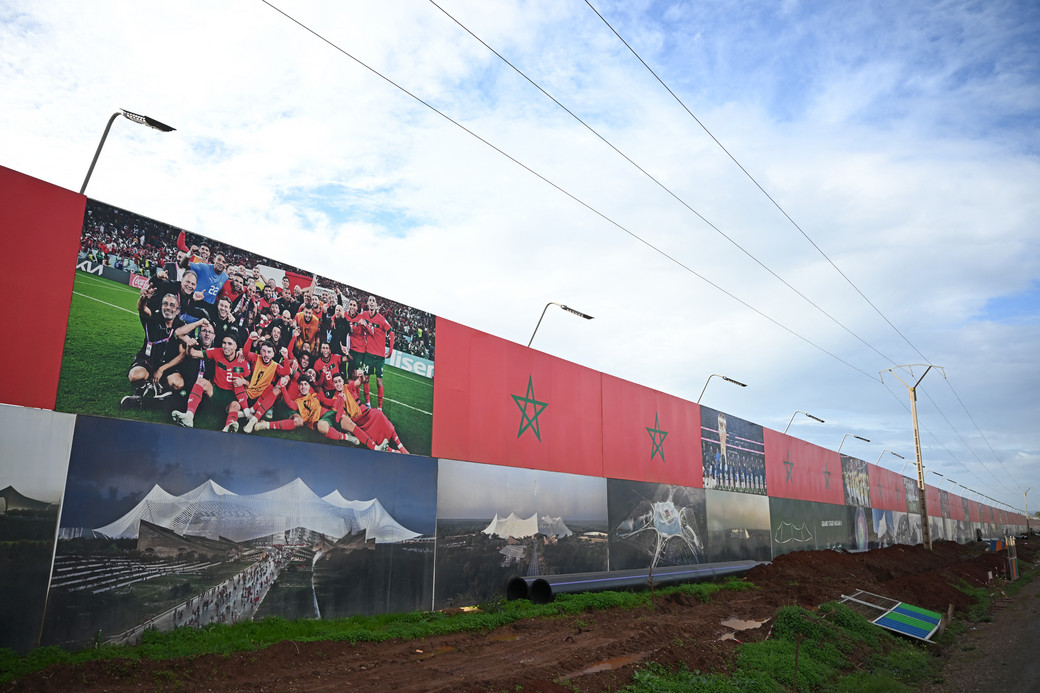
Morocco continued to strengthen its position as one of world football’s rising powers by combining on-field success with major infrastructure investments and growing political influence within the game. Following its impressive performances at consecutive FIFA World Cups, the North African nation also set its sights on hosting the 2030 FIFA World Cup final.
After defeating the Netherlands in the knockout stage of the 2026 World Cup, Morocco head coach Mohamed Ouahbi highlighted the country’s growing stature in international football.
“Morocco has gained everybody’s respect now. It’s not because of what we’ve said. We’ve now shown it.”
A bid for football’s biggest stage
Morocco’s ambitions extend well beyond the pitch. As a co-host of the 2030 FIFA World Cup alongside Spain and Portugal, the country has been lobbying to stage the tournament’s final, despite competition from Spain’s iconic venues, including Camp Nou in Barcelona and Santiago Bernabéu in Madrid.
Morocco’s proposal centers on the Stade Hassan II, a new 115,000-seat stadium being built near Casablanca. Moroccan football authorities said construction was expected to be completed by the end of 2027, making it one of the largest football stadiums in the world.
Investments accelerated after historic World Cup run
Following its historic run to the 2022 FIFA World Cup semi-finals, Morocco significantly increased investment in football infrastructure. The country expanded its network of stadiums and youth academies while positioning itself as Africa’s leading football hub.
Morocco also hosted the 2026 Africa Cup of Nations, where it initially lost the final on the field before the result was later overturned by a court ruling.
Diaspora strategy strengthened the national team
A key pillar of Morocco’s football strategy has been the recruitment of dual-nationality players developed in European football systems.
The Royal Moroccan Football Federation successfully convinced several players born or raised in France, Belgium, the Netherlands and Spain to represent Morocco instead of their birth countries. The policy strengthened the national team while reinforcing ties with Moroccan communities living across Europe.
Domestic criticism over football spending
Morocco’s football ambitions have not been universally welcomed at home.
The government committed more than $1 billion to stadium construction and football infrastructure, prompting criticism from parts of the public. During the autumn of 2025, a youth-led protest movement questioned the prioritization of football investments while pointing to ongoing challenges in healthcare and education.
Growing influence beyond the pitch
Morocco’s rise has attracted attention across the international football community, not only because of its performances but also because of its increasing influence within global football governance.
With FIFA set to decide which host nation will stage the 2030 World Cup final, Morocco’s campaign represents another major test of how seriously the football world views the country’s emergence as both a sporting and organizational powerhouse.
If selected, the final would be played at the new 115,000-capacity Stade Hassan II, marking the first time a FIFA World Cup final would be held on African soil since the tournament expanded into its modern era.