
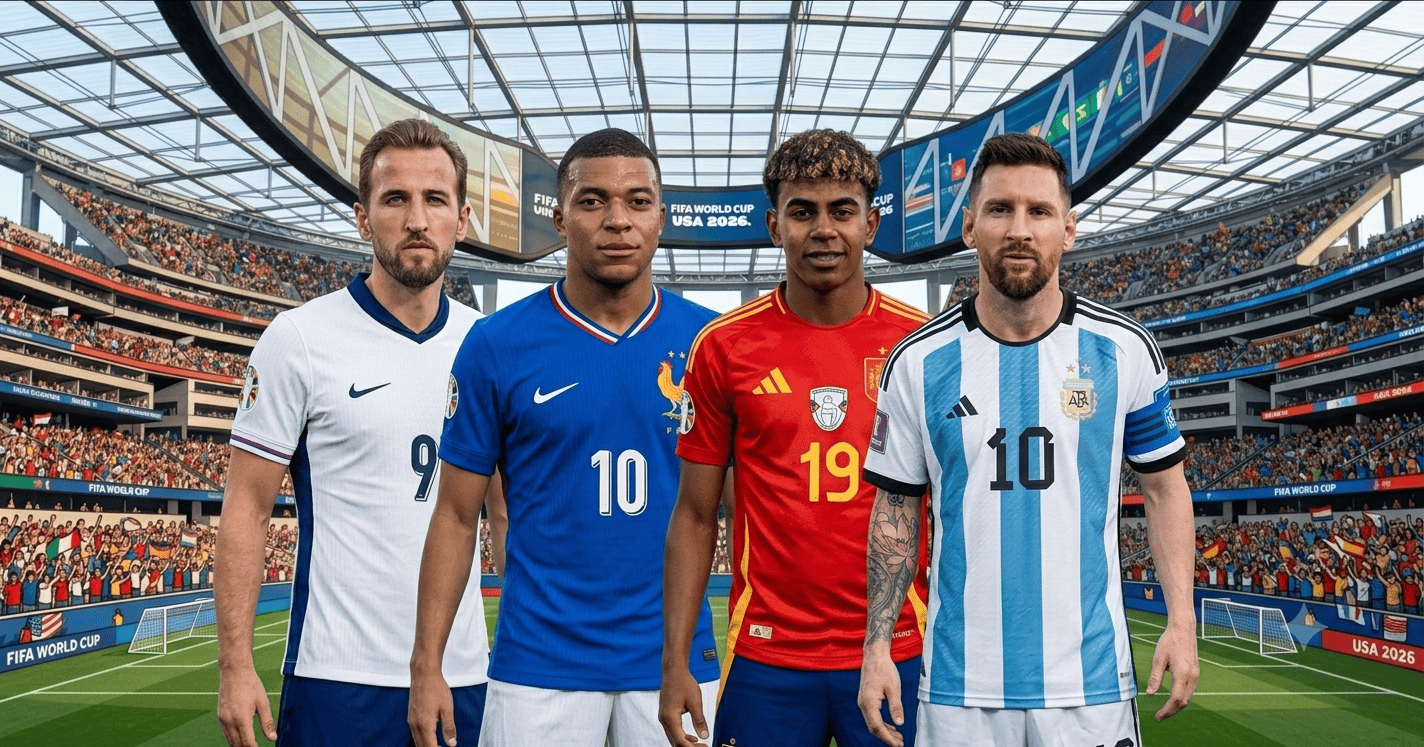
As the 2026 FIFA World Cup enters the semi-final stage, attention is naturally focused on the tactical battles on the pitch. Yet the two remaining fixtures will also serve as the biggest stage for another contest—one between global sportswear giants Nike and Adidas.
With the quarter-finals complete, the tournament has produced a perfectly balanced commercial picture. Two of the four remaining teams are outfitted by Nike, while the other two wear Adidas.
After aggressively expanding its national team portfolio in recent years, Nike heads into the semi-finals represented by two of Europe’s football heavyweights, France and England. Adidas, meanwhile, continues its long-standing presence at the elite end of international football through Argentina and Spain.
France (Nike) vs Spain (Adidas)
This semi-final is not only a clash between two contrasting football philosophies, but also between two different branding strategies. Nike’s global marketing narrative is built around the star power of Kylian Mbappé, while Adidas is showcasing a different story through the emergence of Lamine Yamal and Spain’s collective style of play.
England (Nike) vs Argentina (Adidas)
Commercially, this is arguably one of the most valuable matchups of the tournament. Jude Bellingham represents Nike’s next generation of global football icons, while Adidas continues to build around Lionel Messi and what could be the final World Cup chapter of the Argentine legend.
A showcase for the industry’s biggest rivalry
With the expanded 48-team World Cup, Nike, Adidas and Puma have once again demonstrated their dominance of the global football equipment market by supplying the majority of participating national teams. The fact that all four semi-finalists are equipped by either Nike or Adidas underlines just how concentrated the market has become at the highest level of international football.
Of course, winning the World Cup alone does not determine a brand’s commercial success. However, semi-finals and finals attract billions of viewers worldwide, creating one of the sport’s most valuable platforms for jersey sales, marketing campaigns, athlete visibility and overall brand perception. Performances by star players can also influence endorsement opportunities, product launches and future sponsorship negotiations.
That means the next 180 minutes will decide more than just the two finalists. They will also provide the latest chapter in the ongoing rivalry between the world’s two leading football brands, with the stories that emerge likely to shape marketing narratives and commercial strategies well beyond the final whistle.