
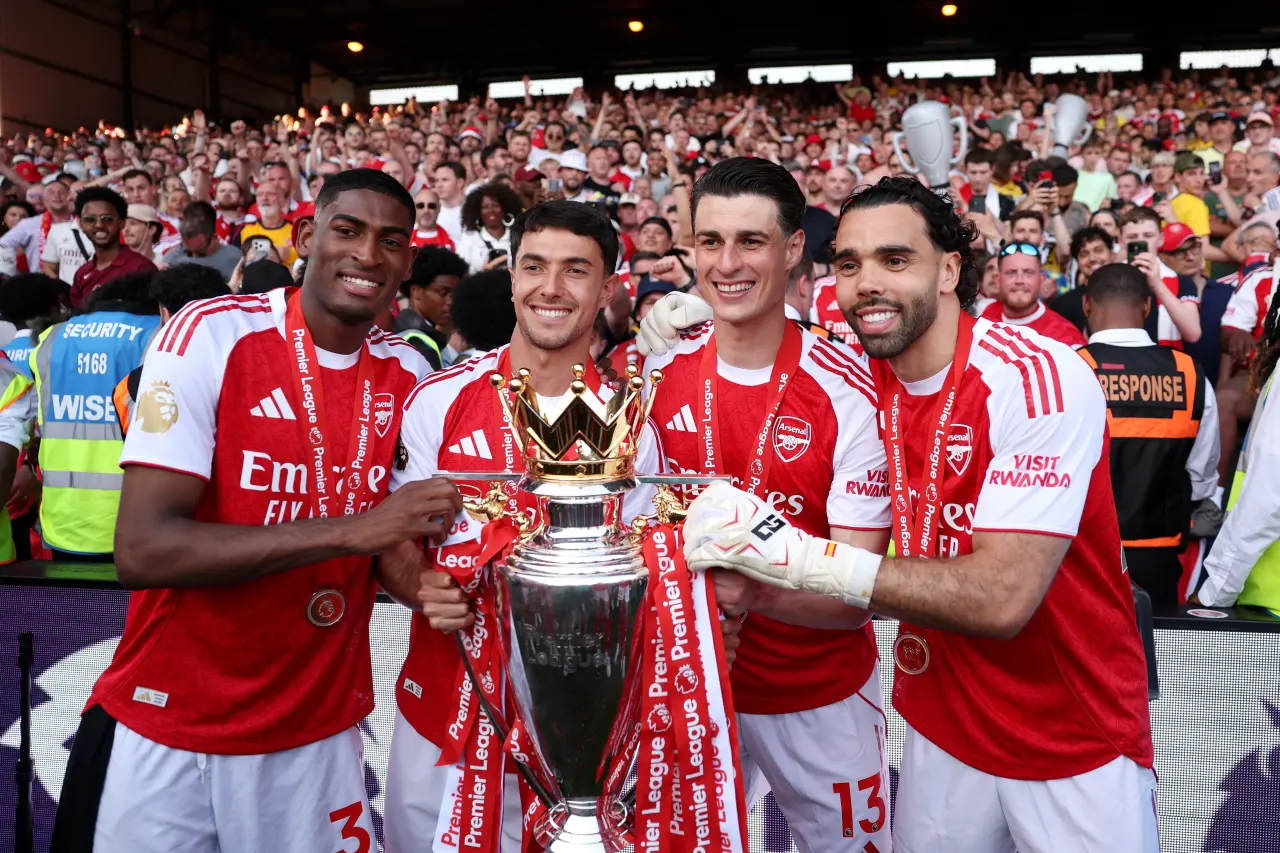
The Premier League is preparing a landmark financial agreement with the English Football League (EFL) that could see around £1.5 billion (€1.7 billion) distributed to England’s lower divisions over the next decade.
The proposed “New Deal” aims to reshape the financial relationship between the Premier League and the EFL, which represents the Championship, League One and League Two. According to Sky News, the 20 Premier League clubs could discuss and potentially vote on the proposal as early as next week, provided the latest negotiations reach a successful conclusion.
At least 14 of the 20 Premier League clubs would need to approve the agreement. If approved, the proposal would then be formally presented to the EFL.
The agreement has been under discussion for more than three years, with negotiations repeatedly interrupted by disagreements over the scale and structure of financial redistribution. The Premier League is now aiming to reach a binding agreement within weeks, potentially by the end of August.
Transfer levy set to rise from 4% to 6%
One of the main elements of the proposal is an increase in the transfer levy paid by Premier League clubs.
The levy would rise from 4% to 6% of transfer fees, generating additional revenue to help finance payments to the lower divisions.
For example, on a £117 million transfer, the contribution would increase from £4.68 million to £7.02 million. The additional cost would therefore fall primarily on clubs involved in the biggest transfer deals.
The main payments would also be distributed among Premier League clubs according to a revenue-based formula of approximately 1.7:1 or 1.8:1, similar to the system already used for certain elements of broadcasting revenue distribution.
As a result, the Premier League’s highest-revenue clubs, including Arsenal, Chelsea and Manchester City, would become the largest contributors to the New Deal.
Annual payments could reach £160 million
The agreement could begin as early as the 2026/27 season, provided it is finalized in time.
The first annual payment is expected to be below £100 million, before rising above £130 million in the second year and reaching approximately £160 million from the third year onwards.
The annual figure would then remain around that level for the rest of the agreement, taking the total value of the 10-year package to approximately £1.5 billion.
However, the exact amounts and payment schedule remain subject to ongoing negotiations.
Some sources close to the EFL have reportedly described elements of the proposal as “insufficient”, meaning discussions over the size of the redistribution package and the conditions attached to the funding remain unresolved.
Parachute payments could be reduced
The New Deal is also expected to include a gradual reduction in parachute payments — the financial support provided to clubs relegated from the Premier League for three seasons.
The system has long been criticized for contributing to competitive imbalances in the Championship. Relegated clubs often retain significantly greater financial resources than their rivals, allowing them to maintain higher wage bills and transfer budgets.
The proposed changes would aim to reduce that gap while continuing to provide relegated clubs with a degree of financial protection against the sharp drop in revenue that follows relegation.
£20 million emergency fund for struggling clubs
Another key element of the proposal is the creation of a £20 million emergency fund for EFL clubs facing severe financial difficulties.
The fund would act as a last-resort mechanism for clubs at risk of entering administration.
The agreement would also impose restrictions on how the new funding can be used. At least 20% of the money received by EFL clubs would have to be invested in infrastructure, including stadiums, training grounds and operational facilities.
The objective is to ensure that the additional funding is not entirely absorbed by transfer fees and wages, but also generates long-term improvements to clubs’ assets and financial sustainability.
Regulatory pressure is mounting
The negotiations are taking place under increasing pressure from England’s Independent Football Regulator (IFR).
The Premier League has already given chief executive Richard Masters the mandate to negotiate the agreement during the summer. However, the proposed deal is also designed to prevent direct intervention by the regulator, which has the power to impose its own redistribution mechanism.
IFR chairman David Kogan has repeatedly urged the Premier League and EFL to reach a bilateral agreement, warning that regulatory intervention would represent a failure of the football system.
If no agreement is reached, the IFR could intervene in both the parachute payment system and the wider distribution of funds between the divisions.
The Premier League is therefore aiming to complete the negotiations by August, ahead of the expected publication of the regulator’s “State of the Game” report in the autumn.
The report is expected to examine the financial flows within English football and the significant economic disparities between the divisions. The gap between the Premier League and the Championship remains the most significant, largely because of the enormous broadcasting revenues generated by the top flight.
The negotiations come as the Premier League prepares to introduce its Squad Cost Ratio, a new system that will limit clubs’ sporting expenditure to 85% of football-related revenues, including net transfer profits and losses.
The New Deal could also require Championship clubs to begin transitioning towards a similar financial model, gradually bringing the economic rules governing the top two divisions closer together.
The proposed agreement would represent one of the most significant financial restructurings in English football in recent years. Beyond providing additional funding to the lower divisions, the deal aims to address the structural imbalance between the Premier League and the rest of the English football pyramid.