
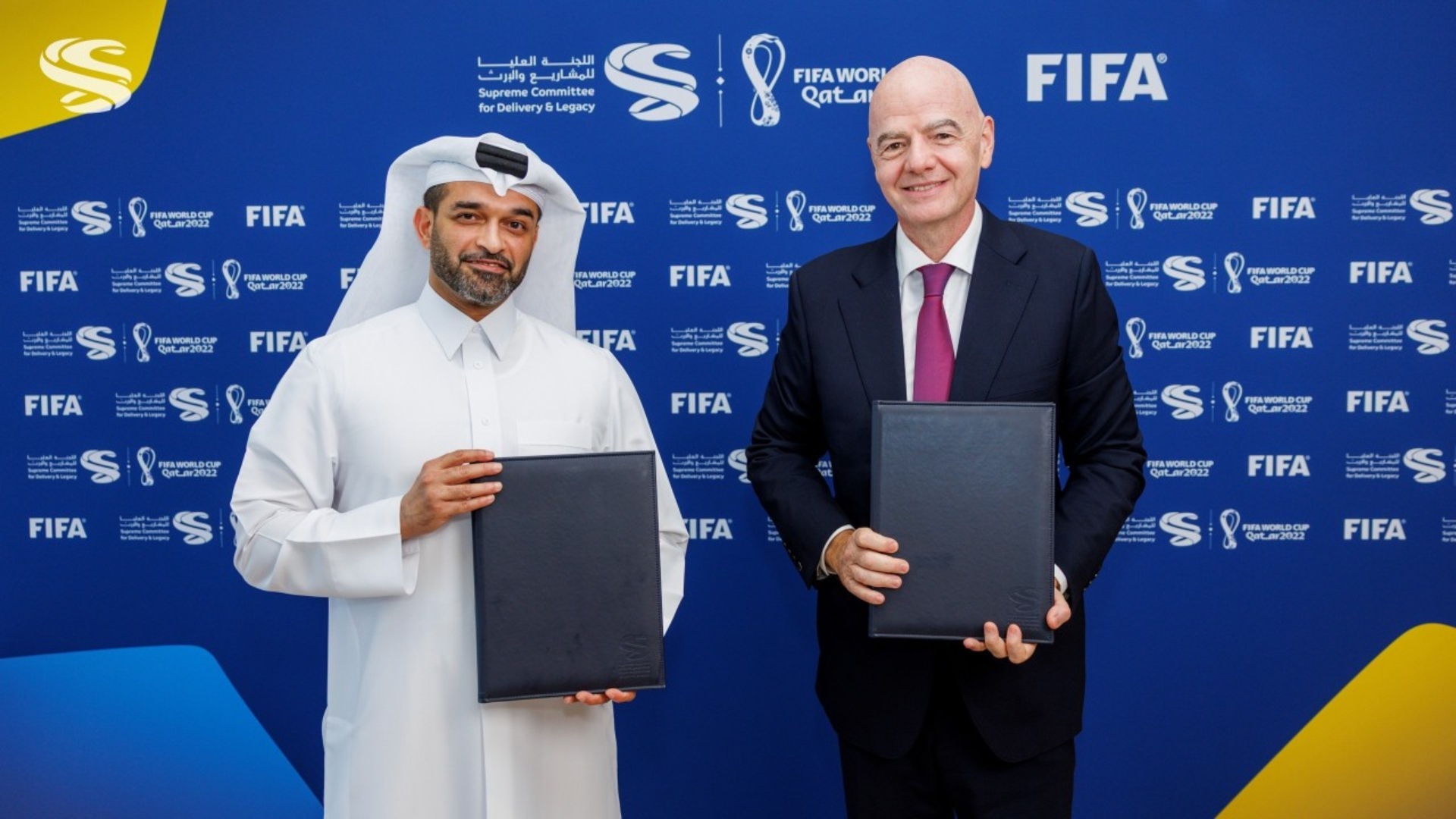
A delegation from Qatar’s Supreme Committee for Delivery & Legacy has been sent to multiple host cities across the United States, Canada, and Mexico to support preparations for the FIFA World Cup 2026.
The move reflects FIFA’s strategy of leveraging operational expertise from previous tournaments as the expanded 48-team World Cup approaches.
According to reports, the Qatari team is sharing know-how in areas such as tournament operations, workforce planning, fan engagement, infrastructure coordination, and event technology.
Knowledge transfer from Qatar 2022
The delegation brings experience gained from the highly scrutinized yet widely praised FIFA World Cup 2022, where Qatar hosted its first-ever World Cup.
FIFA president Gianni Infantino praised Qatar’s contribution, highlighting its growing role in global sports event delivery.
“We have seen the expertise that Qatar has built over the years in hosting world-class events,” Infantino said, citing stadiums, transport systems, and hospitality infrastructure.
Since 2022, Qatar has continued hosting major football tournaments, including youth competitions and regional events such as the FIFA Arab Cup.
Expanding role in global sports operations
The Supreme Committee, originally established in 2011 to deliver Qatar’s World Cup infrastructure, is now positioning itself as a long-term global events delivery organization.
It has recently been involved in organizing multiple international competitions, including youth and club tournaments hosted in quick succession.
The committee’s deployment for 2026 marks one of the clearest examples yet of cross-host collaboration in modern World Cup history, where operational expertise is being transferred between editions.
Background and controversies
The committee has also faced scrutiny in the past. Before Qatar was awarded the 2022 hosting rights, reports alleged a covert campaign targeting rival bids. The committee has strongly denied all such accusations.
Despite controversy, Qatar’s event delivery capabilities have become a reference point within FIFA’s expanding global tournament model.
As preparations for 2026 intensify, the collaboration signals a broader shift toward shared expertise in staging the world’s largest sporting event.