
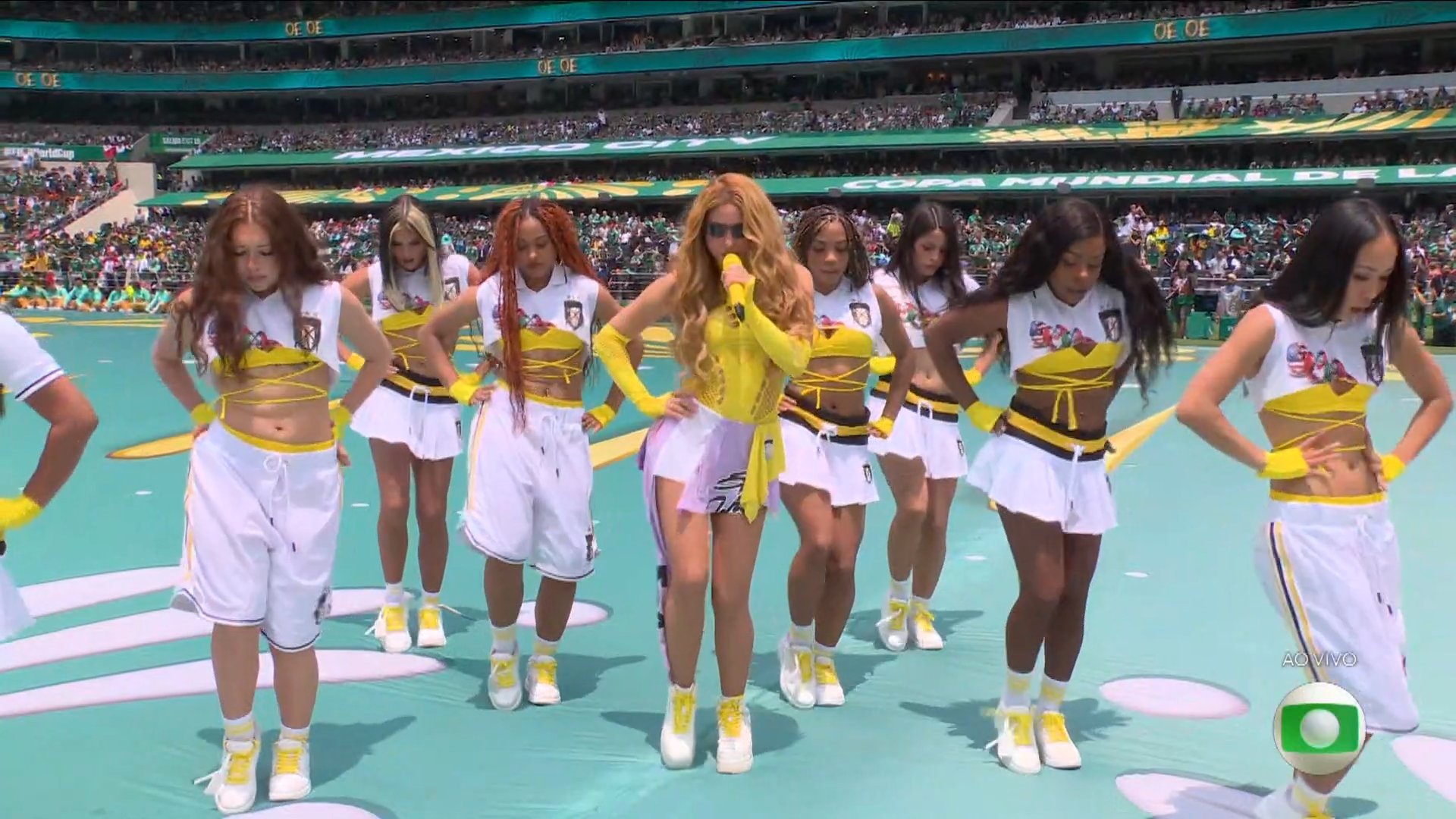
The 2026 FIFA World Cup officially got underway at the iconic Azteca Stadium in Mexico City, where a dazzling opening ceremony headlined by Shakira and Burna Boy launched the biggest tournament in football history. Yet while the spectacle captivated millions, controversy surrounding politics, visas and public protests continued to dominate the build-up.
Performing “Dai Dai,” the official song of the 2026 World Cup, Colombian superstar Shakira delivered a high-energy show alongside Burna Boy and hundreds of dancers. The performance transformed the stadium into a festival atmosphere and marked Shakira’s return to the World Cup stage 16 years after her iconic “Waka Waka” anthem at the 2010 tournament.
The ceremony also featured appearances from Alejandro Fernández, Belinda, Danny Ocean, J Balvin, Lila Downs, Los Ángeles Azules, Maná and Tyla, all contributors to FIFA’s first-ever official World Cup album.
Despite the global excitement, viewers in the United States were left frustrated after broadcaster FOX chose not to air the ceremony live, opting instead for studio analysis featuring Thierry Henry, Zlatan Ibrahimovic and Alexi Lalas. Spanish-language network Telemundo broadcast the full event, drawing praise from fans who wanted to watch the performances.
Off the pitch, the tournament begins amid significant tension. Mexico City has seen ongoing demonstrations led by teachers’ unions demanding higher pay, pension reforms and improved labor conditions. Environmental groups and human rights organizations have also criticized the tournament’s environmental footprint across 16 host cities and three countries.
In the United States, visa and immigration policies have emerged as a major talking point. Somali referee Omar Artan was denied entry despite being selected for the tournament, prompting widespread debate. US officials cited security concerns, while Artan described the decision as a devastating blow to his lifelong dream of officiating at a World Cup.
Travel restrictions affecting countries including Iran, Haiti, Senegal and Ivory Coast have further intensified scrutiny. Iran was even forced to relocate its World Cup base camp from Arizona to Mexico shortly before the tournament began.
As criticism mounted, FIFA President Gianni Infantino defended the governing body’s role, arguing that immigration and visa decisions ultimately rest with national governments rather than FIFA itself.
The opening whistle between Mexico and South Africa finally signaled the start of football’s grandest event. But as the tournament begins, it is already clear that the 2026 World Cup will be remembered not only for what happens on the field, but also for the political, social and logistical battles unfolding beyond it.