
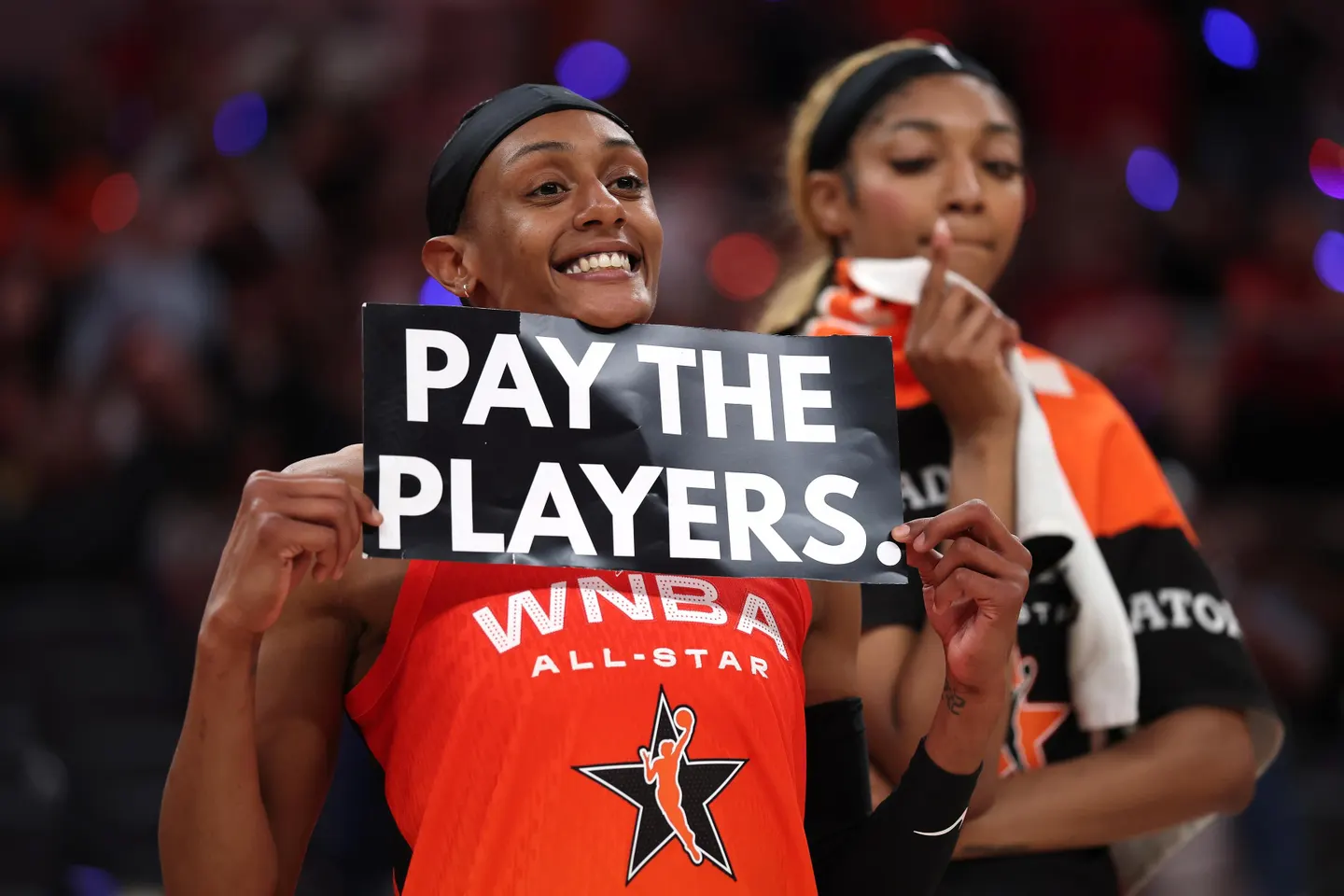
The WNBA and the Women’s National Basketball Players Association (WNBPA) have reached a landmark collective bargaining agreement (CBA) just weeks ahead of the league’s 30th season. While headlines highlight salary increases, the deeper significance lies in a structural transformation of women’s sports economics.
For decades, women’s sports were considered a cultural asset rather than a financial one. That perception is rapidly changing. The new CBA signals that women’s sports have entered a new era of institutional and economic maturity, creating opportunities for sustainable growth.
Key Changes in the CBA
- Salary cap: Rising from $1.5 million to $7 million
- Supermax salary: Approximately $1.4 million
- Average player salaries: Expected to approach $600,000
- Minimum salaries: Surpassing $300,000
- Revenue share: Players to receive close to 20% of league revenue
“These are not incremental adjustments,†said WNBPA president Nneka Ogwumike. “Players will enter the league without a sense of lack, enabling the WNBA to retain and attract top talent while supporting long-term growth.â€
Economic Impact on Women’s Sports
The agreement addresses historical constraints that limited women’s sports, including underinvestment in facilities, restricted media exposure, and assumptions about fan demand. With streaming platforms, social media, and global branding opportunities, women’s sports now reach audiences at unprecedented scale.
The WNBA’s CBA formalizes a sophisticated economic model, with revenue sharing, rising salaries, and enhanced working conditions. This foundation supports media rights growth, sponsorship expansion, and franchise valuation increases, creating a stronger, scalable league.
Similar trends are visible in the National Women’s Soccer League (NWSL). Teams like Angel City FC and Kansas City Current have reached valuations of approximately $335 million and $315 million, with many franchises increasing in value by 70%–100% in less than two years. These are signs of an emerging asset class in women’s sports.
The WNBA’s new CBA demonstrates that women’s sports are no longer just a cultural phenomenon—they are high-value, investable enterprises poised to unlock billions in economic potential.