
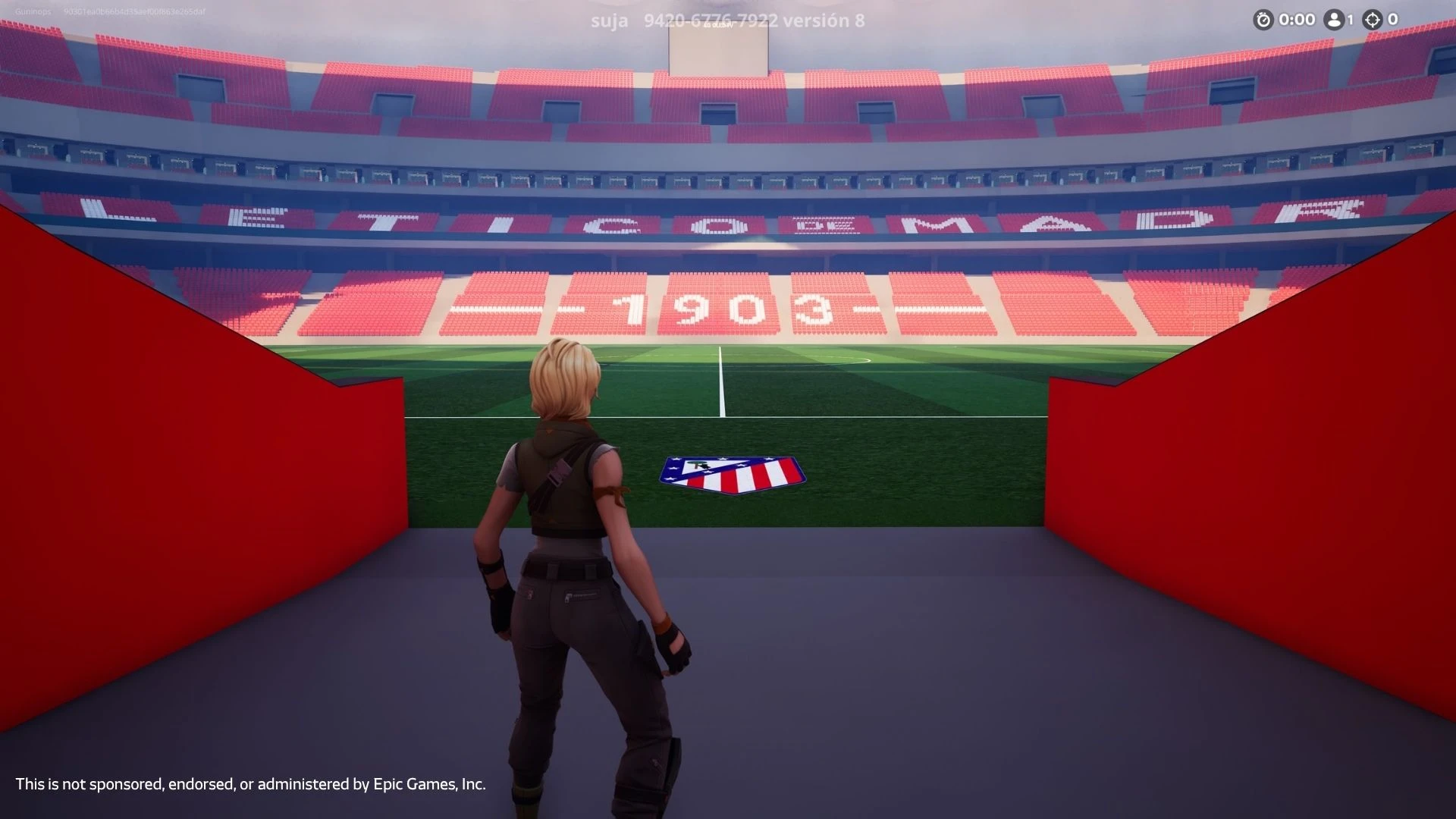
Atlético de Madrid has taken another step in football’s growing shift toward gaming culture by launching a fully playable digital version of the Riyadh Air Metropolitano inside Fortnite, expanding its strategy to reach younger, digitally native audiences.
The experience is accessible via island code 9420-6776-7922 and recreates the club’s stadium within one of the world’s most popular gaming platforms. Players can explore and compete inside a virtual version of Atlético’s home ground, blending football culture with interactive gameplay.
Developed in collaboration with gaming creator Pol Domínguez (“SUJA”), the project aims to replicate not only the stadium’s architecture but also its atmosphere and key internal spaces. The result is a detailed digital environment designed to feel familiar to match-going supporters while also functioning as an introduction for new global audiences.
While the launch operates as a gaming activation on the surface, it reflects a broader strategic shift. Football clubs are increasingly investing in virtual ecosystems as traditional fan engagement continues to evolve. With Fortnite reaching hundreds of millions of users worldwide, the platform has become a key space for entertainment brands, artists, and sports organisations to build interactive experiences.
For Atlético, the initiative is part of a wider digital roadmap that goes beyond simple marketing. The club plans to expand its presence within gaming platforms with additional experiences in the coming months, aiming to strengthen long-term engagement with younger generations who may not consume football primarily through television or live attendance.
The club also emphasised that the virtual stadium is not only designed for existing fans, but also for users encountering the Riyadh Air Metropolitano for the first time through gaming. In this sense, the stadium becomes more than a physical venue—it becomes a digital asset and a global entry point into the club’s identity.
As football continues to merge with interactive entertainment, Atlético’s move highlights a clear trend: stadiums are no longer just places where matches are played, but evolving spaces that exist simultaneously in physical and digital worlds.