
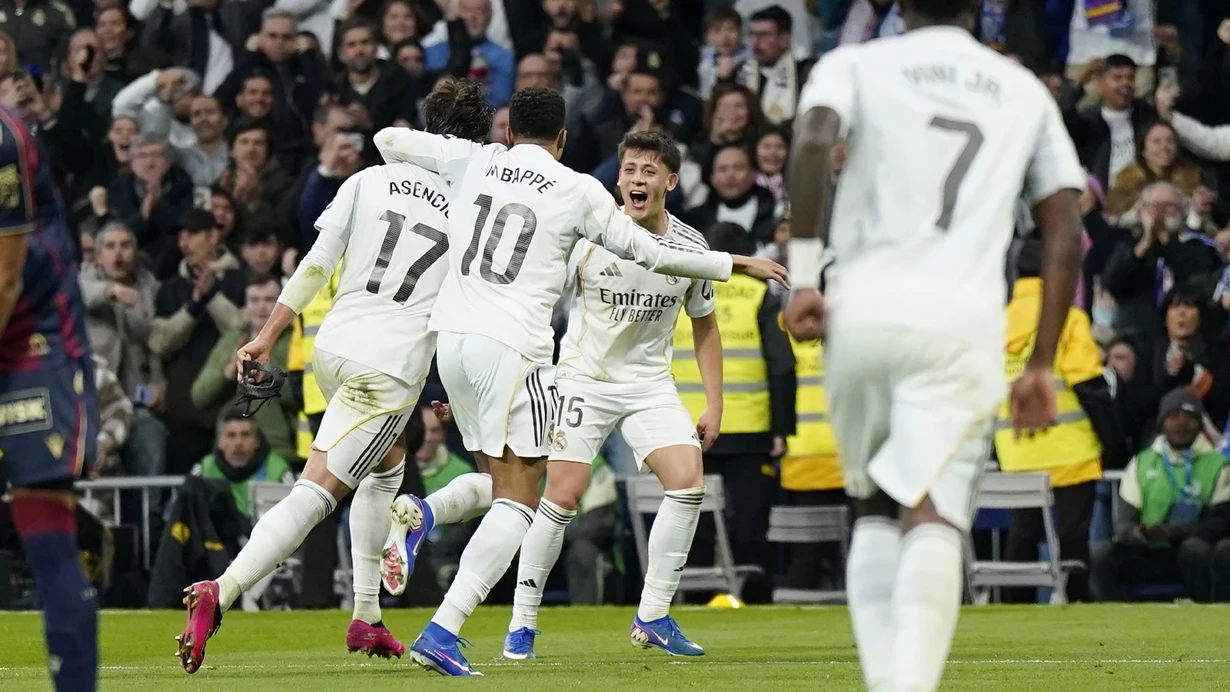
The knockout playoff round of Europe’s premier club competition just wrapped up, and while the on-pitch drama had fans on the edge of their seats—Real Madrid’s miraculous escape against Benfica, Paris Saint-Germain narrowly surviving Monaco, and Norway’s Bodø/Glimt stunning Inter Milan—the real spectacle for economists and sports finance nerds is happening off the field.
The 16 teams that just clinched their spots in the Round of 16 have already secured serious cash, and the financial ladder they’re about to climb is absolutely staggering.
The Money Already in the Bank
Here’s the thing that separates European club football from nearly every other professional sport: money starts flowing before anyone kicks a ball.
Each of the 36 teams that participated in the league phase earned a guaranteed €18.62 million ($20.4 million) just for showing up. On top of that, clubs earned €2.1 million per win and €700,000 per draw throughout their eight-match league phase run.
Arsenal, who went undefeated through the league phase, have amassed nearly €40.6 million to this point, making them one of the financial kings of the competition so far. The eight teams that automatically qualified for the Round of 16 (the top eight finishers) each pocketed an additional €11 million, plus ranking bonuses that could push their totals well past €80 million.
But here’s where it gets interesting for the playoff winners: the eight teams that just advanced from the playoff round earned an additional €1 million for their playoff participation, on top of everything they’ve already collected.
The mathematical reality is brutal for non-elite clubs. Smaller teams like Kairat Almaty, who finished last with an identical record to Villarreal, have made less than half of what the Yellow Submarine earned, despite identical on-pitch performance—a direct result of what UEFA calls the “value pillar,” which essentially pays clubs based on their television market value and historical success.
Bayern Munich leads the league in total earnings to date with approximately €100 million. Manchester City, Liverpool, Arsenal, Chelsea, and Barcelona aren’t far behind, each having secured between €78 million and €86 million already.
The Real Money Starts Now
The Round of 16, Quarter-finals, Semifinals, and Final comprise the true money ladder in professional sports.
Here’s the staggering breakdown of what’s still on the table:
- Round of 16: €11 million per team
- Quarter-finals: €12.5 million
- Semi-finals: €15 million
- Final: €18.5 million
- Championship: €6.5 million bonus (plus €4 million for Super Cup participation)
For context: A club that wins the title could earn up to €127 million in performance-related payments alone. When you factor in the “value pillar”—that mysterious TV market bonus—elite clubs can push their total Champions League earnings toward €200 million in a single season.
That’s roughly equivalent to the entire salary budget of some Premier League clubs.
The 16 Teams Still Fighting
The auto-qualified top eight got a two-leg home advantage in the Round of 16: Arsenal, Bayern Munich, Liverpool, Tottenham Hotspur, Barcelona, Chelsea, Sporting CP, and Manchester City.
The playoff winners unseeded in the Round of 16 draw are: Real Madrid, PSG, Newcastle United, Bayer Leverkusen, Atalanta, Atlético Madrid, Galatasaray, and the Norwegian underdog Bodø/Glimt.
Why Americans Should Care About This
For American sports fans accustomed to salary caps and parity mechanisms, the Champions League’s financial structure is a window into a completely different universe.
In the NFL, total player salaries are capped. In the NBA, salary cap penalties exist to level the playing field. In European football, there’s no such thing—which means that the richest clubs don’t just compete; they essentially lap the field financially with every passing season.
UEFA is distributing €2.467 billion across Champions League clubs and the UEFA Super Cup this season—more than $2.88 billion. The sheer magnitude of that prize pool would make even the most valuable American sports franchises jealous.
And it’s why the same seven or eight clubs have dominated European football for two decades. They earn so much more money just for participating that they can outspend everyone else with ease.
Bayern Munich, Barcelona, Real Madrid, PSG, and Manchester City don’t just have better scouts or coaches—they have exponentially larger revenue streams. By the time Kairat Almaty has played all their matches, Bayern has already earned nearly five times as much prize money.
The Final Verdict
The Round of 16 draw happens February 27, and the first legs kick off March 10-11. By May 30 in Budapest, one club will have earned between €125 million and €200 million from a single Champions League campaign.
In an era where financial fair play is theoretically supposed to prevent runaway spending, the irony is that UEFA has essentially created a structure where the financial rich get richer—and the middle-tier clubs stay trapped in the middle.
But that’s next week’s story. For now, the 16 remaining teams are simply trying to win matches. The money? That’s already changing everything about European club football, one billion euros at a time.