
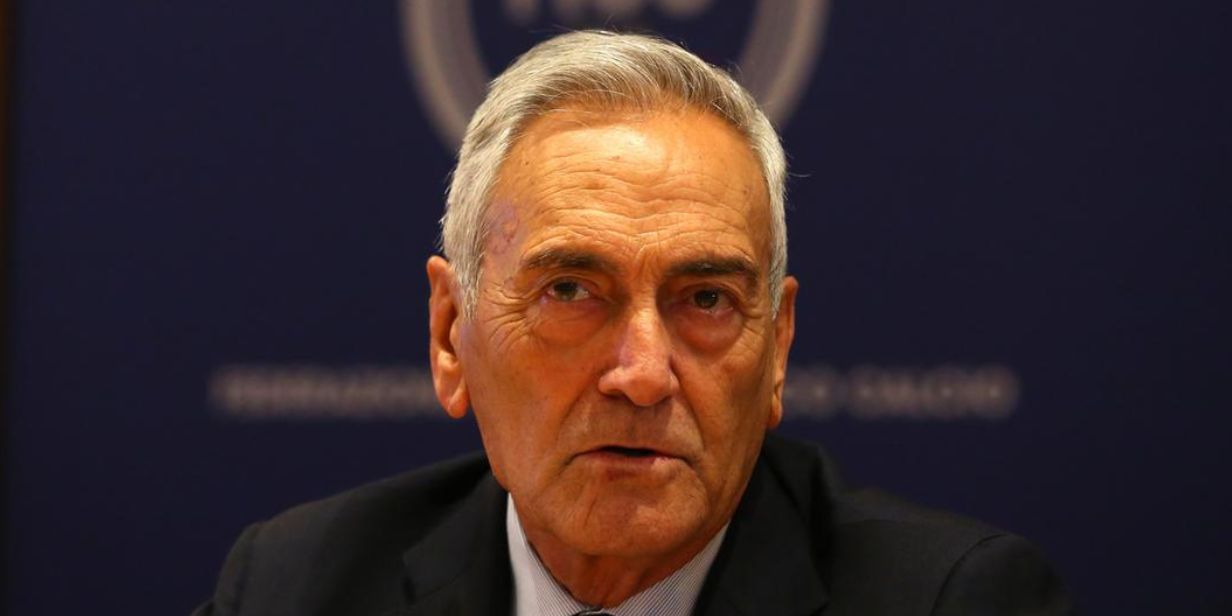
The Italian Football Federation will hold presidential elections on June 22 following the resignation of longtime president Gabriele Gravina, who stepped down after Italy’s third consecutive failure to qualify for a World Cup.
Gravina, who had led the federation since 2018 and was re-elected with over 98% of the vote in 2025, announced his resignation during a meeting at FIGC headquarters in Rome. His departure marks a significant turning point for Italian football governance amid mounting pressure over repeated qualification setbacks.
Italy’s absence from the FIFA World Cup 2026 has intensified scrutiny on leadership, with the national team continuing a worrying trend after missing previous tournaments.
Several candidates are expected to contest the upcoming election. Among the frontrunners is Giovanni Malagò, former president of the Italian National Olympic Committee and a key figure in organizing the Milan-Cortina 2026 Winter Olympics. Other notable names include Giancarlo Abete, who previously led the federation from 2007 to 2014, and Matteo Marani, current president of Lega Pro.
Former Italian international Demetrio Albertini is viewed as an outsider candidate despite backing from players, while legendary Gianni Rivera has also expressed interest, though his chances remain slim.
Malagò is currently seen as the favorite, largely due to strong support from Serie A clubs, which carry greater voting weight in FIGC elections, as well as his leadership role in the upcoming Winter Olympics.
The leadership shake-up extended beyond the presidency. Former goalkeeper Gianluigi Buffon resigned from his role as head of delegation following Italy’s playoff elimination against Bosnia and Herzegovina. Meanwhile, head coach Gennaro Gattuso is also expected to be replaced despite initial backing from federation officials.
💰 Financial Impact
Italy’s failure to qualify is projected to cost the FIGC approximately €30 million in lost revenue. The shortfall includes reduced sponsorship income, missed FIFA prize money, and weaker licensing and merchandising sales.
Key commercial agreements—such as the federation’s kit deal with Adidas—are expected to generate lower returns due to the absence from the global stage. Additionally, participation alone in the World Cup group stage would have secured around $10.5 million in combined FIFA payments, a revenue stream now lost.